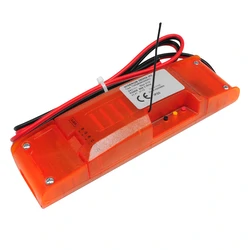
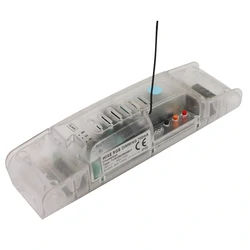
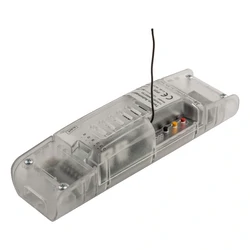
What Is Scene Setting?
Store breakfast-bright, dinner-warm and all-off lighting moods on a single keypad with Wise Controls scene products.
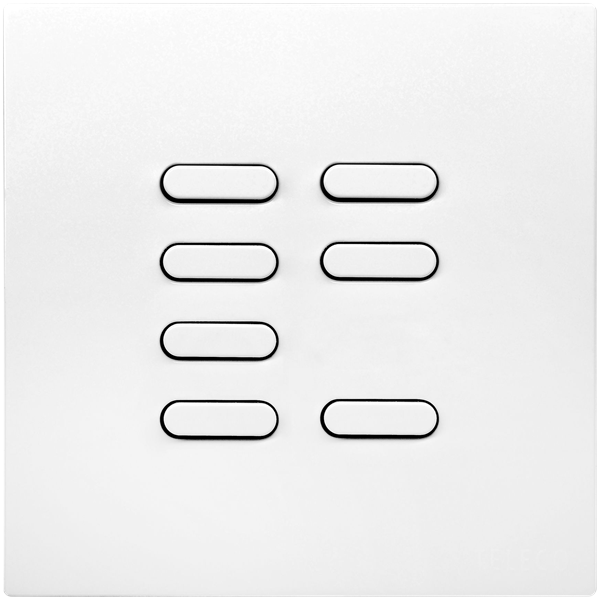
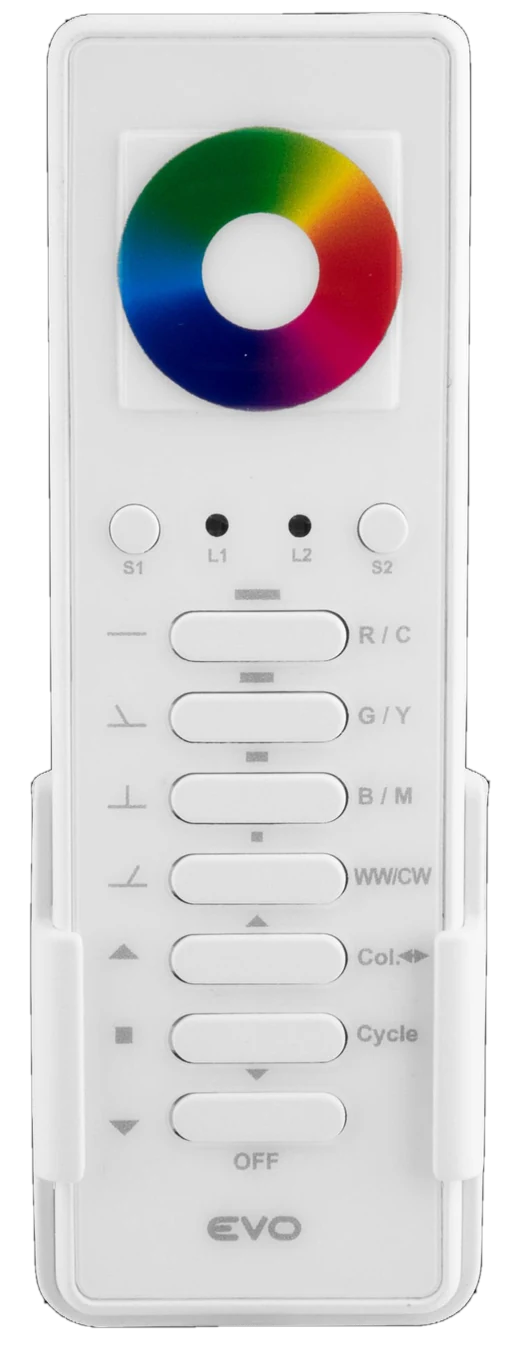
Read moreUse the 7-channel RGB keypad — CH1–4 pick a colour (hold to dim), CH5 switches the colour set, CH6 auto-cycles and CH7 is off — or reach for the remote and its colour wheel. Either way the room re-lights live.
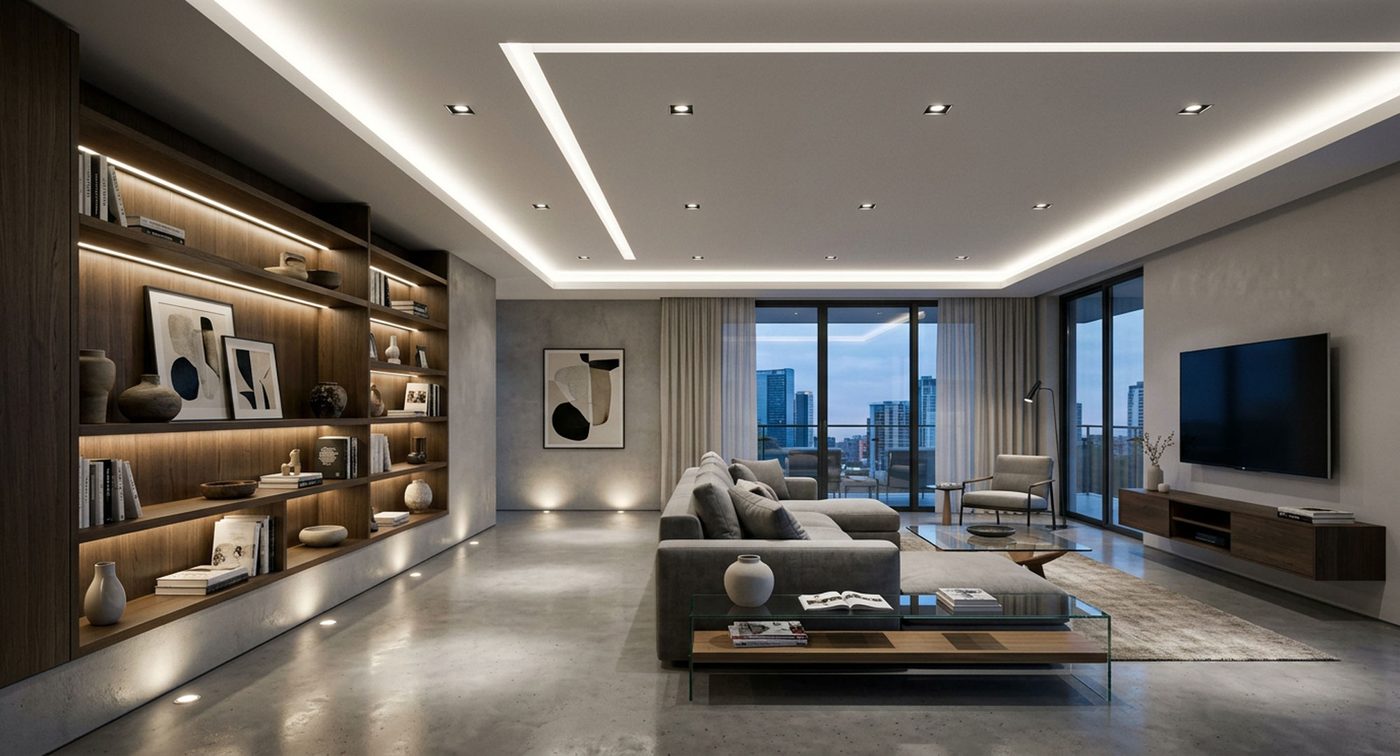
Colour-change lighting covers far more ground than most people expect. At one end it is full RGB colour mixing — red, green and blue blended to any colour in the spectrum, a whole room re-lit at the press of a button, genuinely useful for a pool, a garden, a shopfront or an event space. At the other end it is a shift so subtle you would struggle to name it, a crisp working white in the morning easing to a low, warm one at night. Most schemes worth having use a bit of both. This guide covers what colour-change lighting does, why it is worth specifying, the difference between RGB, RGBW, tunable white and addressable tape, and — the part that decides how good it is to live with — every way you can control it.
A conventional dimmable fitting has one variable: how bright it is. A colour-change fitting has three or four. Instead of a single string of white LEDs, it carries separate red, green and blue emitters — usually with a dedicated white channel too — and a driver that sets the output of each one independently. Mix them in different ratios and you get any colour in the gamut; run the white channel on its own and you get a clean, usable white rather than the slightly murky one you get from mixing RGB.
The important part is the driver. The fitting is just LEDs; everything interesting happens in the controller that decides how much current each channel gets. That is what you are actually specifying when you plan a colour-change scheme — and it is why the driver, not the fitting, determines what the system can do, how you control it, and whether it will integrate with anything else.
Programme a colour once, store it as a scene, and recall it instantly from a keypad. That is the whole workflow. The colour is not something you fiddle with each evening; it is a preset you press.
Colour is the headline, but it is rarely the reason people are glad they specified it. These are the arguments that hold up in a real scheme.
A fixed white scheme commits you to one mood for the life of the fitting. Colour change lets the same downlights and the same tape be a bright, neutral working light at eight in the morning and a low, warm one at nine at night — without a second circuit, a second fitting or a second visit. You are buying flexibility into the fabric of the building at the point when it is cheapest to add.
The most-used feature of most colour-change schemes is not colour at all — it is tunable white. Warmer light in the evening suits how people actually want to feel in a room, and cooler light during the day suits working in it. Getting that shift automatically, or on one button, is the single biggest quality-of-life improvement colour change offers.
A well-commissioned scheme is not something anyone fiddles with. Colours are programmed once and stored as scenes, so day to day it is a button on the wall — no more complicated than a light switch. That is worth insisting on: if a scheme needs a phone and three taps to turn the lights on, it will not get used.
Because each driver is addressed independently, you can treat areas differently without running them as separate switched circuits — cove warm while the task lighting stays neutral, or one end of a long room different from the other. Addressable tape takes this further still, down to the individual pixel.
And then there is colour proper, which does real work in the right context: a brand colour on a shopfront, a pool that changes for an evening, a garden that shifts through the seasons. Specified as one option among many rather than the whole point, it is an asset rather than a gimmick.
"Colour change" covers four quite different lighting types. They are worth separating, because the one you want depends entirely on what you are trying to achieve — and the difference between the first two catches people out more than anything else in this guide.
Three channels — red, green and blue — mixed to produce any colour. This is what the interactive demo at the top of this guide is doing, and it is what a lot of the colour-change catalogue actually is: the RGB downlight modules, the Crystal Ice and Eyeball fittings, most of the decorative range. It does saturated colour beautifully.
What it does not do well is white. Mixing all three channels at full gives you a white of sorts, but it is a thin, slightly off-cast one — fine for a pool or a party, not something you would want to read under. If a fitting needs to be a usable everyday light as well as a colour one, RGB alone is the wrong choice.
RGB plus a fourth channel: a dedicated warm or cool white LED. That white channel is the whole point. It means the same run of tape is a proper 3000K warm white for everyday use — indistinguishable from an ordinary white fitting — and the full colour gamut when you want it. Four-channel drivers for 12V and 24V strip, and the workhorse of most colour-change schemes: cove lighting, under-cabinet runs, feature walls and garden washes. Where a fitting has to earn its keep every day and do colour occasionally, specify RGBW rather than RGB.
No colour at all — just white, at the temperature you choose. Two-channel drivers blend warm and cool white LEDs to shift the light from roughly 2700K to 6000K. This is the option most residential projects actually want: crisp and cool for a working kitchen in the morning, warm and low for the same room at night. It is the least showy form of colour change and by some distance the most used. Our guide to colour temperature covers how to choose the range.
Pixel-addressable tape, where every LED along the run is individually controllable. That makes chases, gradients and dynamic effects possible rather than one flat colour along the whole strip. It is a specialist option — architectural feature lighting, retail displays, stair and handrail effects — and it needs a driver built for it, but nothing else produces the same result.
All three run on the same Wise platform and the same programming workflow, which is the practical argument for specifying them together: one radio network, one keypad, whatever mix of lighting types the project needs.
Before the controls, the lighting. We stock colour-change in every format a scheme is likely to need — tape, downlight modules, retrofit lamps and track. Every item below links straight to the product, and the range links go to the full colour-changing lighting listing.
The most common colour-change format, and the one behind most cove, under-cabinet and feature runs. RGBW tape gives you full colour plus a dedicated warm or cool white, so the same run does everyday white and colour when you want it. COB tape has no visible dots — a continuous line of light rather than a row of LEDs — and the digital addressable version controls every pixel individually for chases and gradients.
 COB Seamless Tape · 5m 24V RGB + 3000K
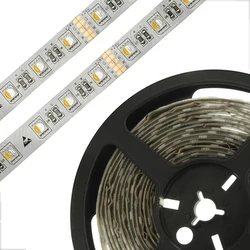 RGB + Warm White Tape · 5m 24V 96W
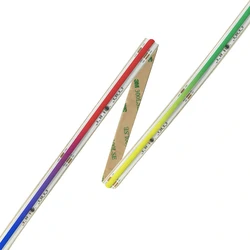 COB Digital Addressable Tape · IP67 5m 24V
Colour change built into the downlight itself, rather than hidden in a cove. These are RGBW LED modules — red, green and blue plus a genuine 3000K warm white channel — so the ceiling runs as ordinary warm-white downlighting day to day and turns to colour on a keypad press. Available as round, square or adjustable, in white or black.
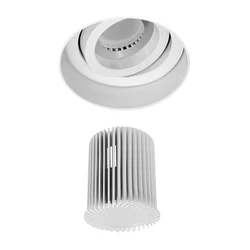 Trimless Round RGBW Module · 8.5W RGB + 3000K
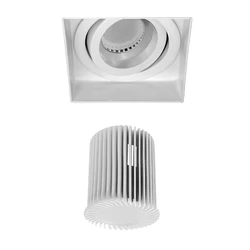 Trimless Square RGBW Module · 8.5W RGB + 3000K
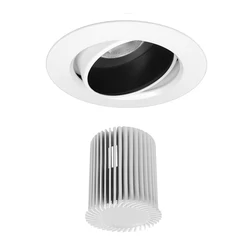 Elegant Adjustable RGBW Module · 8.5W RGB + 3000K
The easiest way into colour change: a smart GU10 with RGB and tunable white in one lamp drops straight into an existing fitting, no driver and no rewiring. RGBW LED modules retrofit colour into a fitting that takes them, and colour-change track heads add it to an existing three-circuit track run.
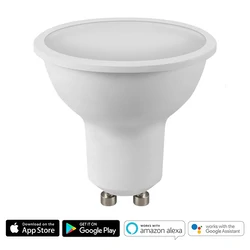 Smart GU10 Lamp · RGB + CCT 2700-6500K
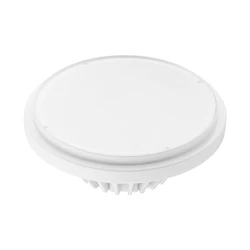 RGBW LED Module · 24V 16W RGB + 3000K
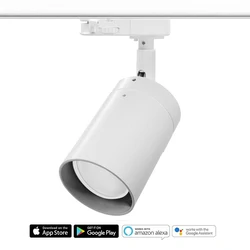 Tube Track Light · 3-Circuit RGB + CCT
This is the decision that determines whether a colour-change scheme is a pleasure or a nuisance. The fittings are broadly similar whichever route you take; the control is what you actually live with. There are four, in rough order of scale.
The simplest option, and the right one for a single room. A smart GU10 or GLS lamp has the radio and the colour mixing built into the lamp itself — screw it in, pair it to the supplied remote or a phone, and you are done. No driver, no wiring, no commissioning. The limitation is that it does not scale: controlling twenty lamps this way is tedious, and there is nothing on the wall for a guest to press. Perfect for a bedroom, a rental, or trying colour change before committing to it.
Zonik smart drivers put the control on your phone. The driver joins the house WiFi and is set up through the Tuya app, giving colour, brightness, scenes, schedules and voice control via Alexa or Google without any wall hardware at all. Bluetooth gives you direct local control if the internet is down. Because the driver does the work, the fittings are ordinary RGBW or tunable white — no special lamps required.
Choose the driver by channel count: two channels for tunable white, four for RGBW, five for RGB plus tunable white on one run.
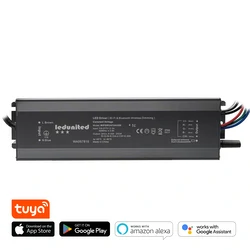 Zonik Smart Driver · 4 Channel RGBW 200W 24V
 Zonik Smart Driver · 5 Channel RGB + CCT 200W 24V
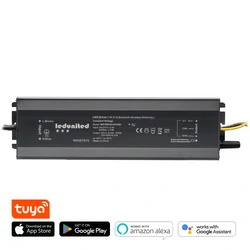 Zonik Smart Driver · 2 Channel Tunable White 200W
Zonik is also sold as ready-matched kits — fitting and smart driver in a single order line, already paired and sized to each other. It is the quickest route from specification to a working scheme.
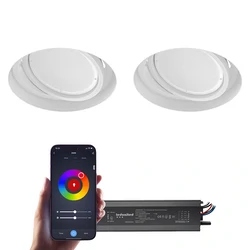 Trimless Round RGBW Downlight · Zonik Smart Kit
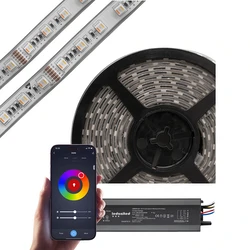 5-in-1 RGB + CCT Tape IP67 · Zonik Smart Kit
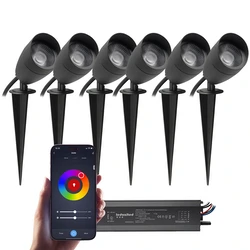 Sub RGBW Garden Spike Spotlight · Zonik Smart Kit
Where a scheme covers several rooms, or where the people using it are not the people who set it up, you want a keypad on the wall. Wise Chameleon shares the 868.3 MHz radio network used by the rest of the Wise Controls range, so a colour driver sits on the same system as Wise Box receivers and Wise Scene keypads and answers the same keypads, remotes and key fobs.
Each keypad button recalls a stored colour state — a daytime palette, an evening palette, off — on the wall where the light switch used to be. A remote with a colour wheel is how you programme those scenes in the first place. No hub, app or internet connection is required for any of it, which matters in a house where the broadband going down should not mean the lights stop working. Add a Wise Daisy hub later and you get app and voice control on top, with every existing keypad working exactly as before. That is the behaviour in the interactive demo above: keypad and remote drive the same lights, and either one re-lights the room.
The master driver is the heart of the system — it holds the radio receiver and the scene memory, and does the actual colour mixing. Choose by the load: constant-current versions (350mA or 700mA) for colour-change fittings, or a 12V/24V version for LED strip. Add slave drivers alongside a master where the run is long or the load is large.
Browse Colour-Change DriversDrivers built for tape rather than fittings. The Tape30 masters handle long 12V and 24V runs; the Digital Pixel Tape Box drives addressable tape where each LED is controlled individually; the RGBW V2 master is the four-channel workhorse for standard colour-plus-white strip.
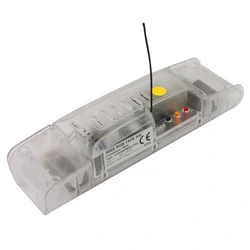 Chameleon Master Tape30 · 12V/24V 90W/180W
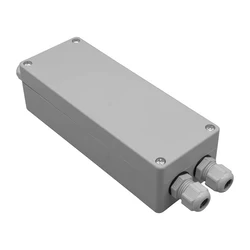 Wise Digital Pixel Tape Box
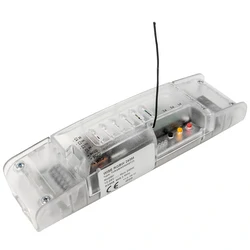 Wise RGBW V2 Master · 12/24V 240W
IP-rated outdoor boxes for facade, garden and pool schemes, rated for permanent exterior installation. The DMX/DALI interface bridges the wireless system into an existing universe, and the Evo colour wheel remote is how you programme and recall colours by hand.
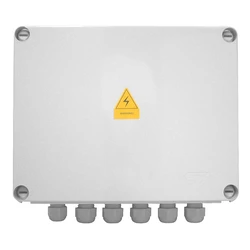 Chameleon Master Outdoor Box · 24V 150W
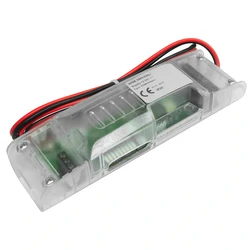 Chameleon DMX / DALI Interface
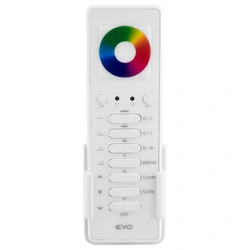 Wise Evo Colour Wheel Remote · 7 Channel
On commercial and architectural projects the lighting usually has to answer to something else — a building management system, an AV rack, or a lighting desk running a whole venue. That is what DMX is for: an industry-standard protocol that has been running stage and architectural lighting for decades. A DMX or DALI interface bridges a wireless colour system into an existing universe, so scenes programmed on a keypad fire as DMX commands and the installation sits inside the wider control scheme rather than beside it. Specify this route where someone other than the end user will be commissioning the lighting.
Four scheme types where colour change does real work rather than decorating for its own sake.
Brand-colour RGBW washes on retail and hospitality frontage. Programme a seasonal palette, recall it on a timer, and change it for an event without anyone getting a ladder out.
Subtle warm white through the summer, a deeper amber through autumn — the same fittings, switched from a keypad. Colour change in the garden is mostly about warmth rather than colour, and it is the easiest place to see the difference a shift of a few hundred kelvin makes. See our guide to controlling garden lighting for the wider scheme.
IP-rated underwater and surround RGBW, with DMX programming for evenings and events. This is the one application where full saturated colour is almost always the right answer.
Tunable white through working hours, a brand-colour wash after dark, and an event mode — all recalled from one master keypad, so the front-of-house team presses a button rather than calling a technician.
No — and for most whole-house schemes you should not rely on one. App control (Zonik over WiFi and Bluetooth) is excellent for a zone or two and adds scheduling and voice control, but a wall keypad is what makes a scheme usable by everyone in the building. Wireless keypad systems such as Wise Chameleon need no hub, app or internet connection at all: colours are stored in the driver and recalled by button. Many schemes sensibly use both.
It depends on the route. Wireless keypad systems pair the driver directly to the keypad over radio, so no hub is needed. WiFi app drivers connect to your existing router — again no dedicated hub, though they do want an internet connection for remote and voice control. Only when you add app or voice control on top of an RF keypad system (a Wise Daisy hub, for example) does a bridge come into it.
RGB has three channels and makes colour by mixing red, green and blue. RGBW adds a fourth channel with a dedicated white LED. Both do saturated colour equally well; the difference is white. RGB's mixed white is thin and slightly off-cast, so an RGB fitting is a colour fitting first. RGBW gives you a genuine warm or cool white alongside the colour, so the same fitting works as ordinary everyday lighting and does colour when asked. For anything that has to light a room day to day, specify RGBW.
RGBW mixes red, green and blue to make any colour, plus a dedicated white channel for a clean, usable white. Tunable white has no colour at all — it blends warm and cool white LEDs to shift colour temperature, typically 2700K to 6000K. Use RGBW where you want colour; use tunable white where you only want the quality of the white light to change through the day.
Yes. The drivers are open-standard and will run any RGBW or tunable white strip at the right voltage (12V or 24V). There are no proprietary fittings, so you can choose the tape and the driver separately.
Yes. Selected controllers output industry-standard DMX, and a DMX/DALI interface bridges the wireless system into an existing universe. Colour scenes programmed from a keypad fire as DMX commands, so the system fits architectural and stage workflows without a translation layer.
Yes. The whole Wise range shares one 868.3 MHz radio network, so a colour driver sits alongside Wise Box receivers, Wise Scene keypads and Wise Fusion dimmers and can be triggered from the same keypads.
Yes. IP-rated outdoor driver boxes are rated for permanent exterior installation, and are the usual specification for facade washes, garden and tree uplighting, and pool surrounds.
Planning the wider control scheme? What Is Scene Setting? covers storing lighting moods on a single keypad, and Wireless Two-Way Dimming explains adding a dimmer anywhere without pulling cable.
Garden facade, pool surround, hotel reception or retail accent — our technical team will check the load on each zone and specify the right driver, controller and keypad mix for your project. Free of charge, and you'll talk to a specifier, not a sales line.
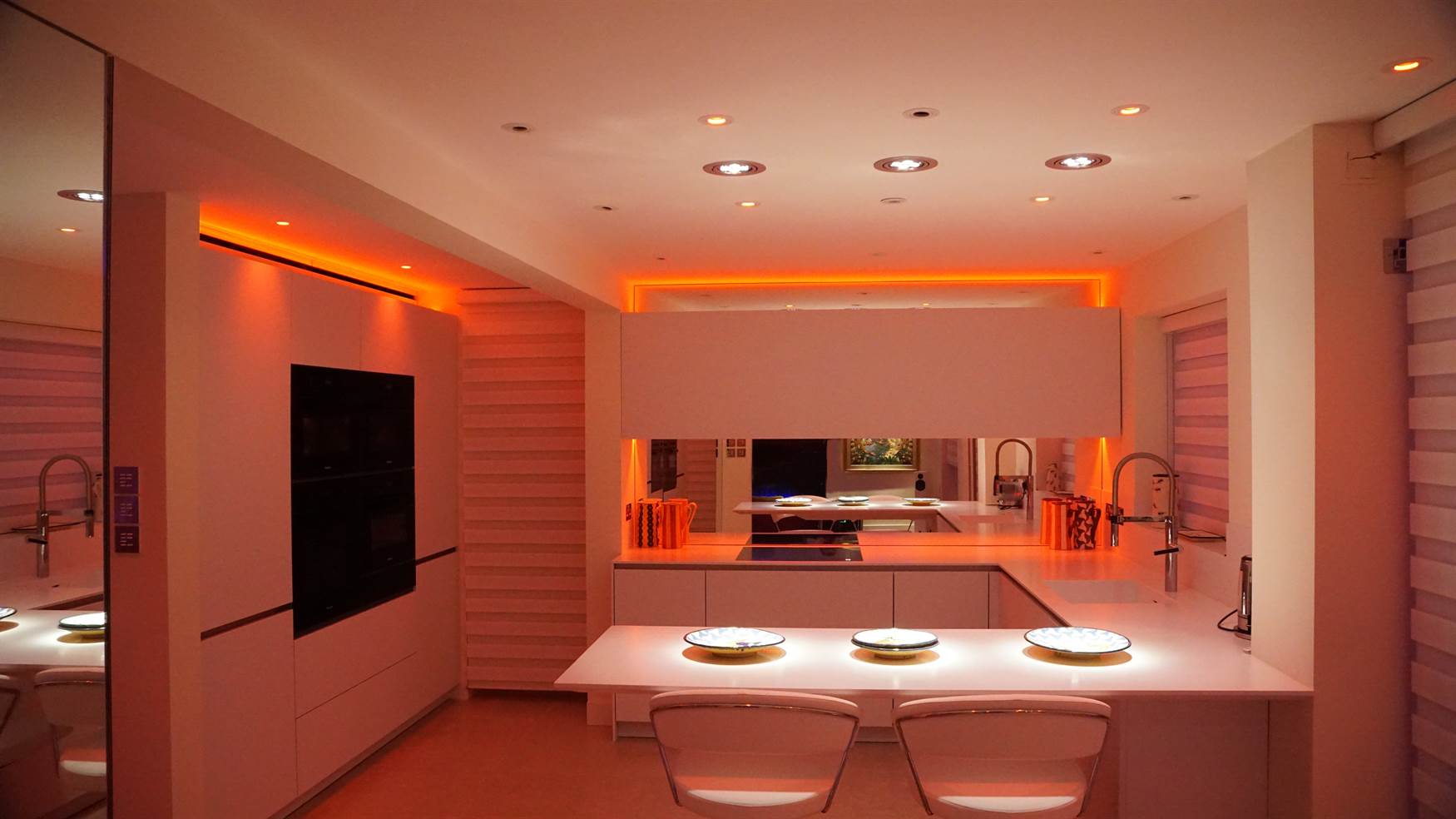
More lighting control guides from our team
 Smart Controls
Store breakfast-bright, dinner-warm and all-off lighting moods on a single keypad with Wise Controls scene products.
Read more Smart Controls
Add a second or third LED dimmer to an existing circuit with no chasing, no rewiring and no extra cable.
Read more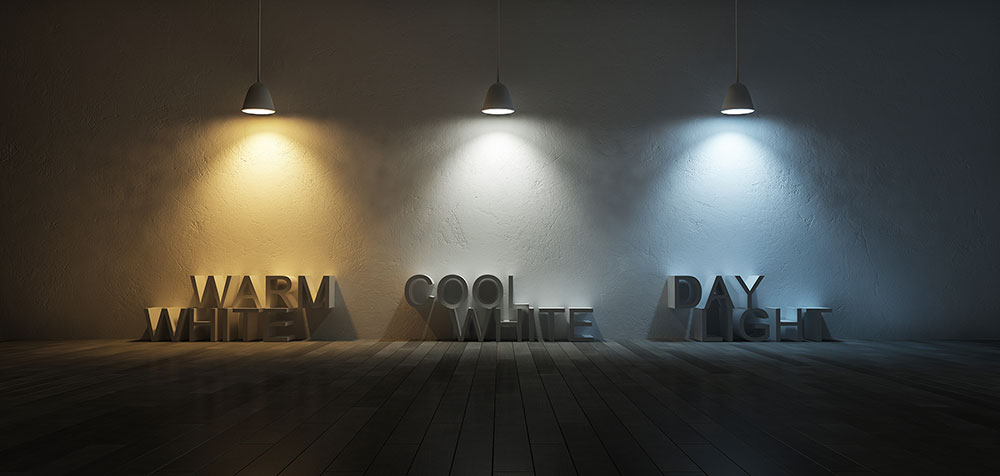 Technical Guide
What Kelvin actually means, and how to choose the right warmth of white for each room in the house.
Read more