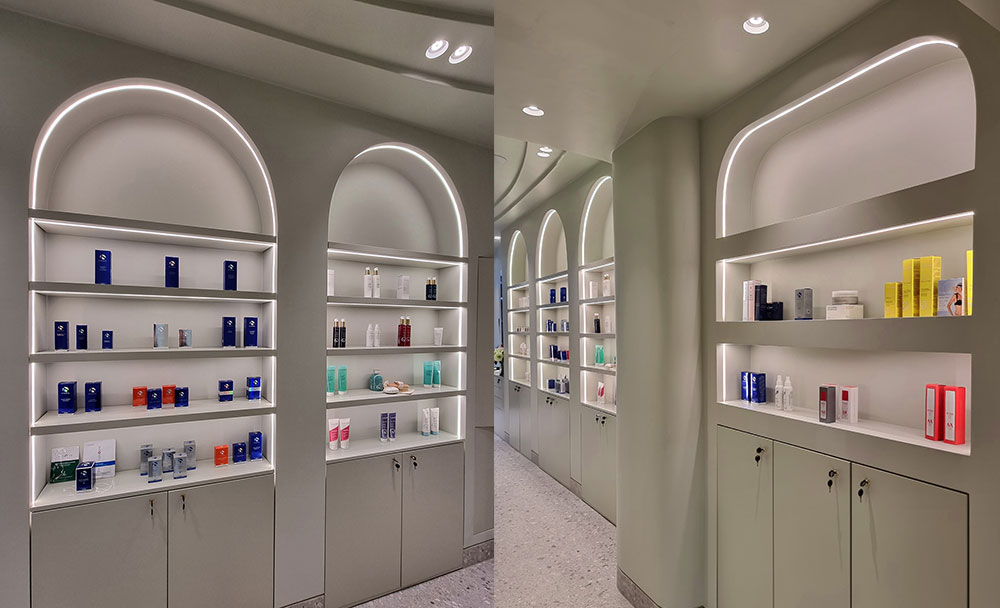
Everything you need to know about choosing the right LED strip type, voltage, density, and accessories for your project.
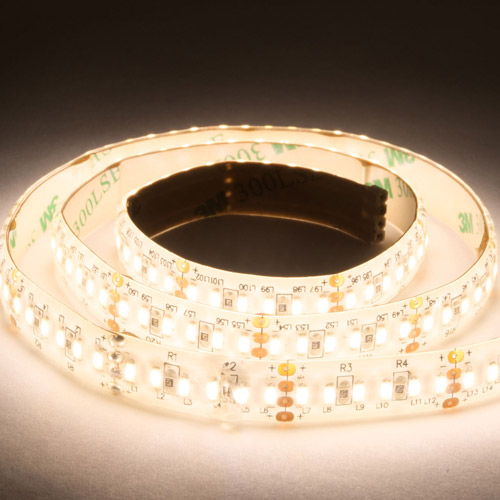
Flexible TapeLED Flexible TapeThe most widely used format — a self-adhesive PCB with LEDs at regular intervals. Available in 12V and 24V, single colour, tunable white, RGB, and RGBW. Visit our dedicated LED tape page for the full range and technical specs.
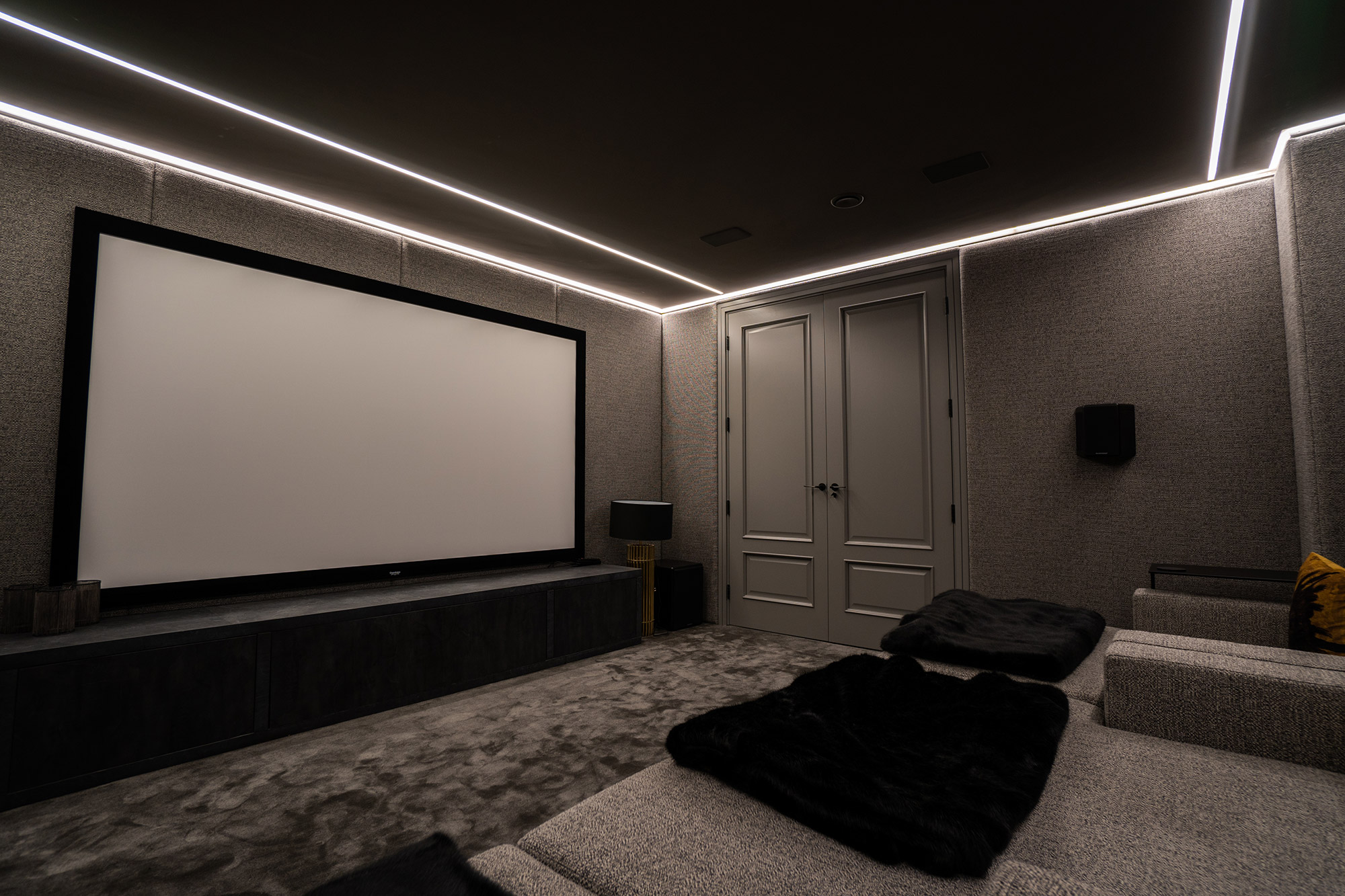
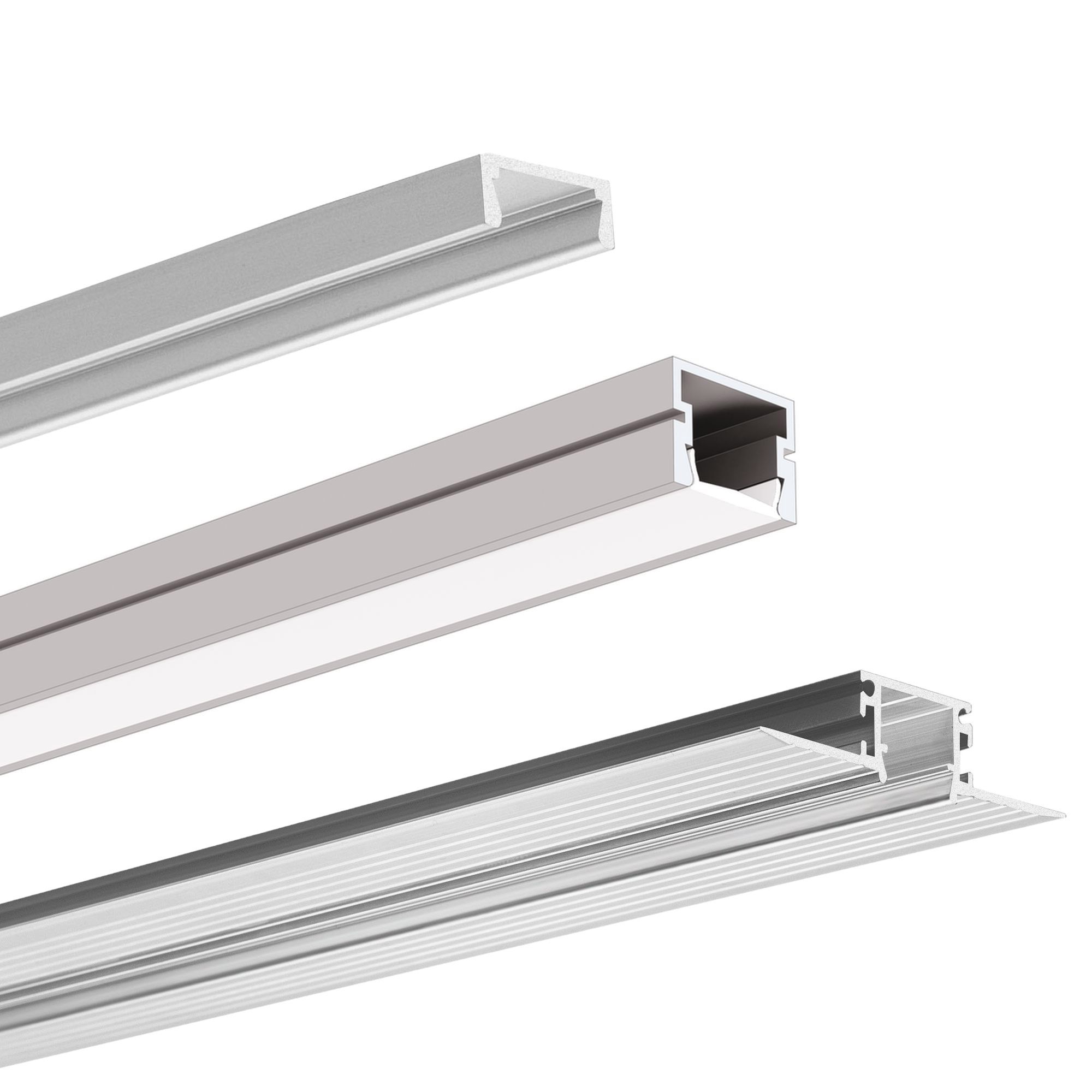
ProfilesAluminium Profiles & ExtrusionsAlways use LED tape inside an aluminium profile. The profile protects the tape, conducts heat away from the LEDs, and a diffuser cover eliminates visible hotspots. See our profiles page for recessed, surface, suspended, corner, and shadow gap options.
12V vs 24V12V vs 24V LED Tape12V tape can be cut more frequently (every ~50mm) and suits shorter runs. 24V tape is more efficient, can run longer before voltage drop, and suits higher-density strips. For runs over 5m, 24V is strongly recommended.
DensityLED Density & OutputMeasured in LEDs per metre (e.g. 60 LED/m, 120 LED/m). Higher density = more even light, less visible dot effect, higher wattage per metre. High-density tape (14.4W/m+) must always be used in an aluminium profile for heat management.
Rigid StripFeelux Rigid LED StripsPre-assembled aluminium housing with integrated LEDs and a built-in connector system. No profile or separate driver required — strips simply clip together and plug into a transformer. Ideal for under-cabinet runs in kitchens and retail shelving.
Neon FlexLED Neon FlexSilicone casing over LED tape produces a smooth, continuous glow that mimics glass neon without the fragility or cost. Can be bent around curves and corners. Available in single colour and RGB. IP65–IP67 rated for outdoor use.
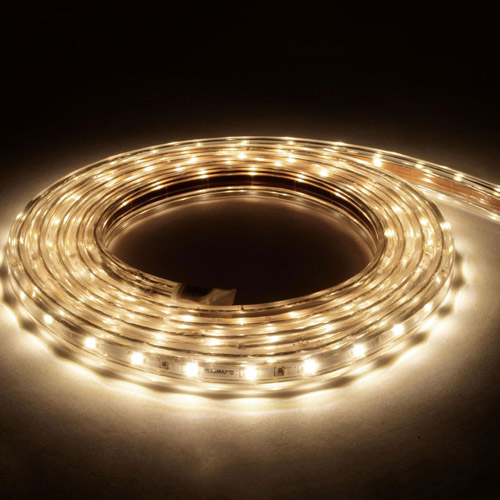
Rope LightsRope LightsLEDs inside a round clear PVC tube — gives a 360° output that diffuses in all directions. Less precise than tape but more robust, simpler to install outdoors, and good for outlining shapes, borders, and garden features.
DriversLED Drivers & TransformersLED tape runs at low voltage (12V or 24V DC) and requires a driver or transformer to step down from 240V mains. Size the driver at 20% above the tape's total wattage load to allow headroom and ensure longevity.
DimmingDimming LED TapeMost LED tape is dimmable but requires a compatible LED dimmer controller, not a standard mains dimmer. Trailing-edge dimmers or dedicated PWM controllers are used. RGB/RGBW tape requires a dedicated RGB controller.
IP RatingsIP Ratings for Wet AreasIP20 — indoor dry use only. IP65 — water-jet resistant, suitable for splash zones (bathrooms, under-counter). IP67 — temporary immersion, suitable for in-ground and wet rooms. IP68 — continuous submersion, for pools and outdoor in-ground.