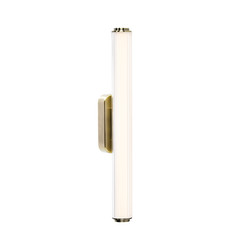
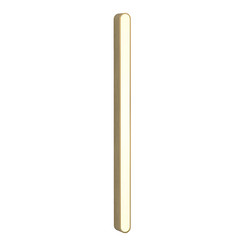
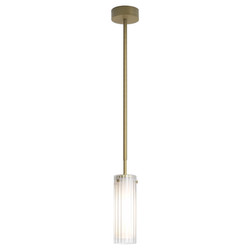
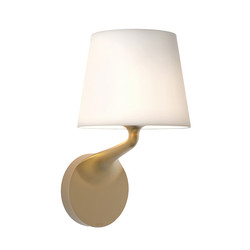
From IP65 recessed downlights to elegant mirror lights and LED tape — everything you need to illuminate your bathroom beautifully and safely.
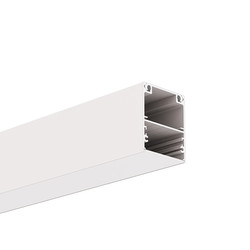
Extrusions
HR-Slim-KOZ LED Extrusion Profile - Plaster In
from £14.00 ex.VAT
Wall Lights
Foam
from £10.11 ex.VAT
Low Levels
Quara Micro
from £11.40 ex.VAT
Mirrors
Aquina
from £99.60 ex.VAT
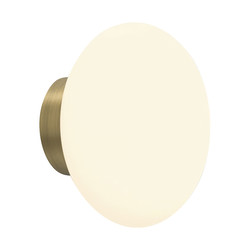
Wall Lights
Ortona
from £81.00 ex.VAT
Downlights
Ottawa
from £51.60 ex.VAT
Extrusions
Inter-Plus LED Extrusion Profile - Ceiling
from £61.60 ex.VAT
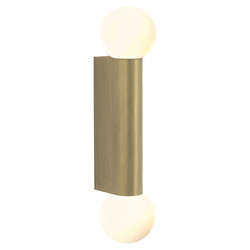
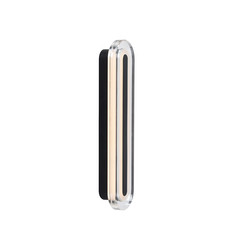
Wall Lights
Cavara
from £26.65 ex.VAT
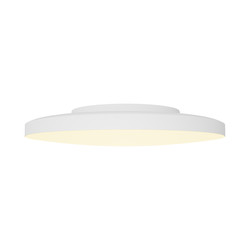
Flush Mounts
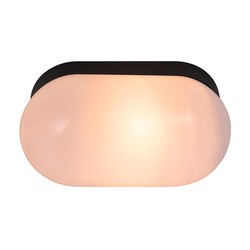
Serenova
from £21.31 ex.VAT
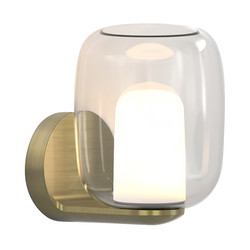
Wall Lights
Virelle
from £26.65 ex.VAT
Mirrors
Atticus
from £190.80 ex.VAT
Pendants
Ottavino
from £106.20 ex.VAT
Mirrors
Millie
from £87.60 ex.VAT
Mirrors
Zeppo
from £61.20 ex.VAT
Extrusions
Piko-45 LED Extrusion Profile - Cabinet and Cove
from £11.20 ex.VAT
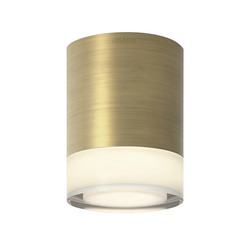
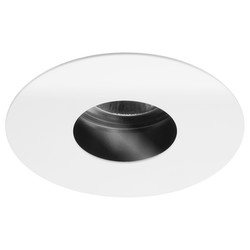
Downlights
Invisible Round
from £53.10 ex.VAT
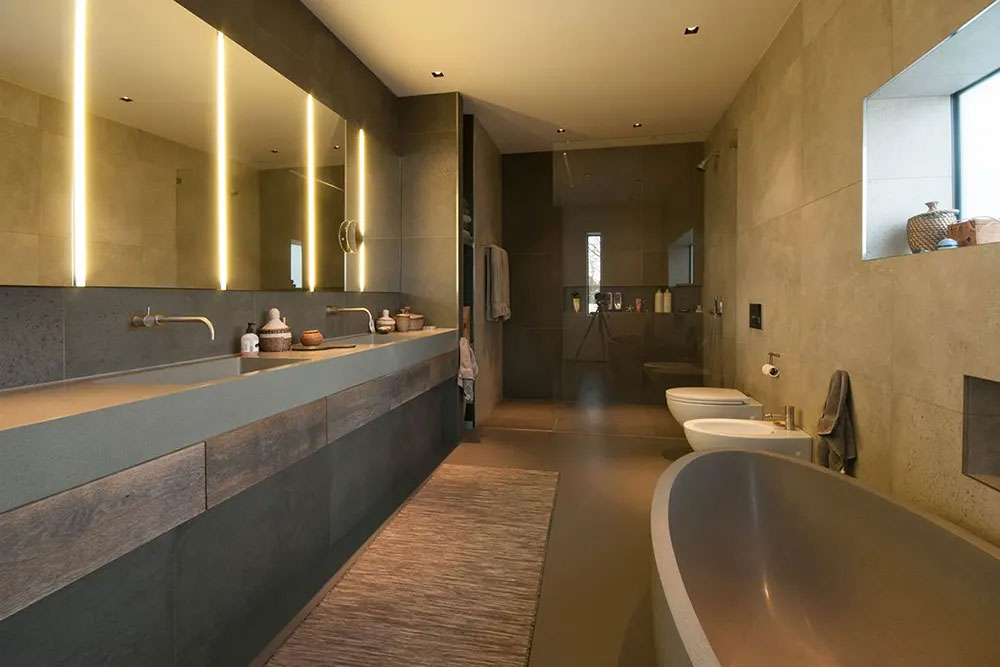
A well-lit bathroom combines ambient, task, and accent lighting — each serving a different purpose. Getting the balance right means a space that's both functional and relaxing.
Everything you need to know about choosing safe, stylish, and effective lighting for your bathroom.
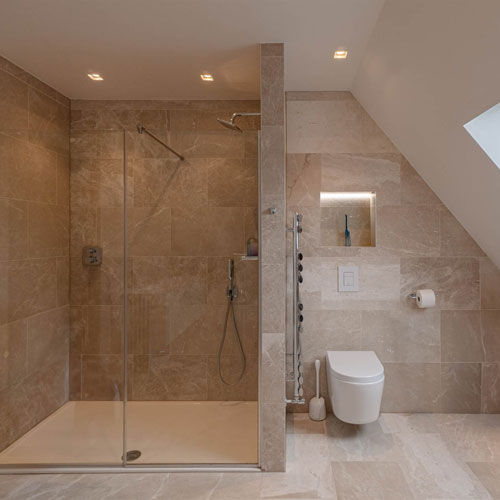
Recessed ceiling downlights are the most popular choice for bathrooms. Choose fire-rated IP65 versions for zones above the shower or bath, and ensure they're rated for use with insulation if fitting into a timber floor above.
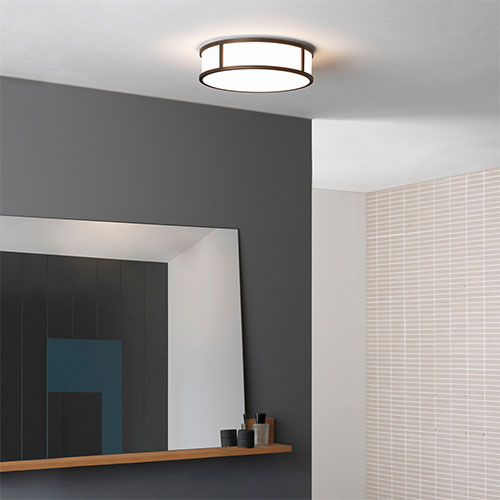
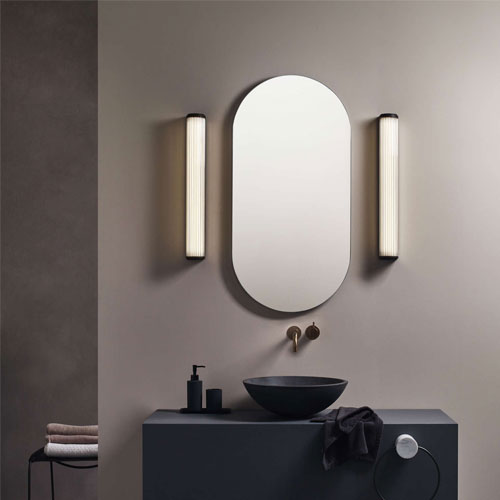
Side-mounted wall lights at eye level (approx. 1.5m from floor) provide the most flattering, shadow-free light for grooming. Overhead lighting alone creates unflattering shadows under the eyes and chin.
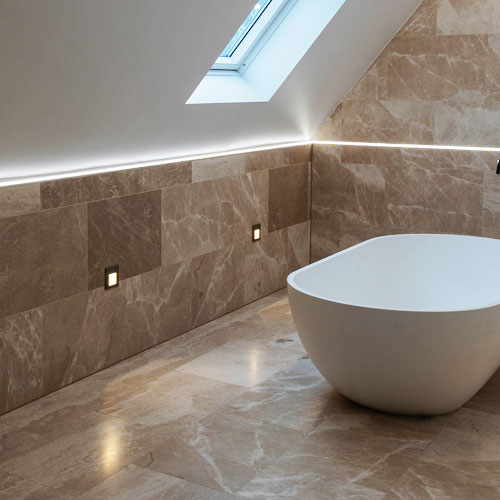
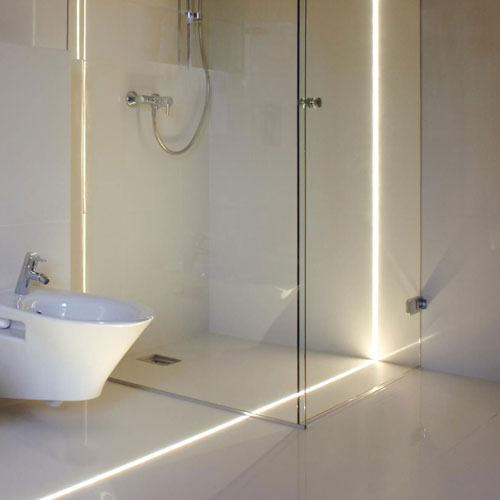
IP67 rated LED tape can be used in wet areas including behind bath panels and inside shower niches. Use aluminium extrusion profiles to protect the tape, diffuse hotspots, and achieve a polished linear finish.
2700K–4000K is most flattering for skin tones and creates a spa-like atmosphere. Avoid cool white (5000K+) in bathrooms — it tends to feel clinical and unflattering under bright ceiling light.
Dimming bathroom lighting allows you to switch between bright task lighting and a softer, relaxing mood. Ensure your chosen downlights and LED tape are listed as dimmable, and use a compatible LED dimmer.
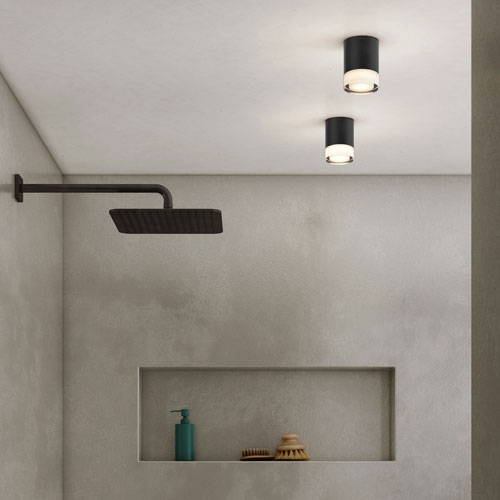
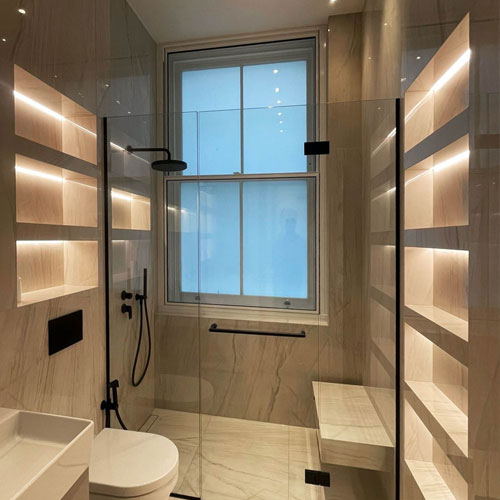
Recessed alcoves and shower niches benefit enormously from internal lighting. IP68 LED tape or dedicated alcove fittings create a premium spa feel and add practical illumination to shelving and decorative recesses.
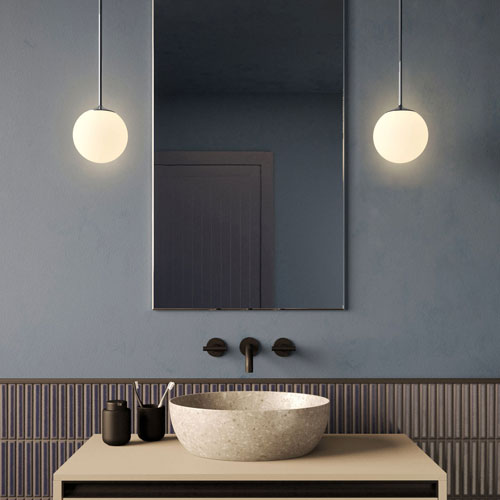
Pendant lights flanking a bathroom mirror make a striking design statement. They must carry a minimum IP44 rating if within Zone 2, and must not be installed within Zone 1. Always verify ceiling height is sufficient.
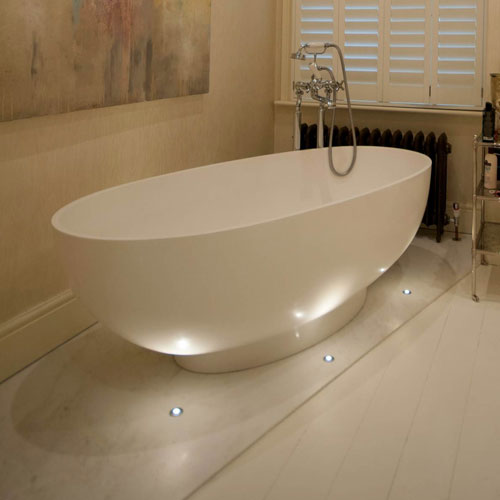
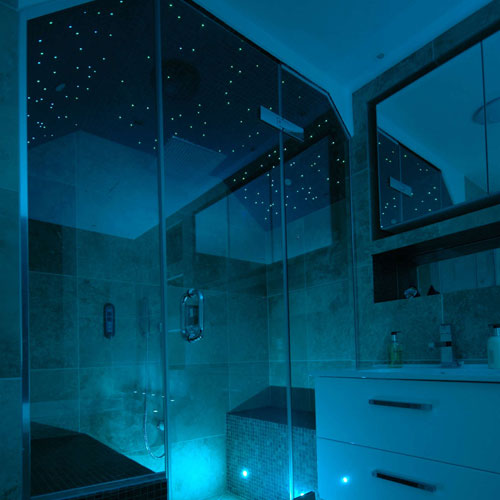
Fibre optic systems are inherently safe in wet environments as the light source (illuminator) is located outside the bathroom. Perfect for starry sky ceiling effects in baths and steam rooms.
All fixed bathroom lighting must be installed by a qualified electrician under Part P of the Building Regulations. IP ratings must be matched to zones — our team can advise. Call 020 8874 2234 for free guidance.
It depends on where the fitting goes. Inside the bath or shower (Zone 0) you need IP67 and a low-voltage SELV supply. Directly above the bath or shower up to 2.25m (Zone 1) the legal minimum is IP44, though IP65 is strongly recommended because of steam and shower spray. Within 0.6m of the bath or shower, and around wash basins (Zone 2), IP44 is the minimum. Beyond that there's no legal requirement, but we still suggest IP44 throughout for longevity.
See our full zones and IP ratings guide for the complete breakdown.
Only outside the defined zones — that is, more than 0.6m from the bath or shower and away from any splashing. IP20 fittings offer no water protection at all, so they must never go in Zones 0, 1 or 2. In practice we recommend at least IP44 across the whole bathroom, since steam spreads throughout the room and the small extra cost helps fittings last far longer.
IP44 protects against splashing water from any direction — fine for Zone 2 and the legal minimum for Zone 1. IP65 is dust-tight and protects against water jets, which is why it's the practical choice directly above showers and baths where direct spray is likely. Most dedicated shower downlights are IP65 as standard.
As a rough guide, position downlights around 1.5–2 ft from the walls with roughly 3–4 ft between each fitting, and aim for even coverage rather than a single central light. A small bathroom often needs four perimeter downlights, a medium room around six, and a larger space six to eight — concentrated around the mirror and shower where you need the most light. Layering in mirror and accent lighting reduces how many ceiling fittings you need.
Our team is happy to help you plan a layout — call 020 8874 2234.
For most bathrooms, warm white at 2700K–3000K is the most flattering for skin tones and creates a relaxing, spa-like feel. If you want crisper light for shaving or applying makeup, a neutral white around 3500K–4000K gives better clarity. We'd generally avoid cool white (5000K and above) in bathrooms, as it can feel clinical. Whatever you choose, keep the colour temperature consistent across the room, and look for a high CRI (90+) so colours render accurately at the mirror.
Side-mounted lights at roughly eye level (around 1.5m from the floor) give the most flattering, shadow-free result. Overhead lighting alone casts shadows under the eyes and chin, which is unhelpful for grooming and makeup. Wall lights flanking the mirror, or an illuminated mirror, are the usual solutions.
Browse our bathroom mirror & wall lights.
Yes, provided the tape carries the right IP rating for its location. IP65 tape is suitable for general bathroom use such as under vanities and around mirrors; IP67 tape can be used in wetter spots like shower niches and behind bath panels. Fitting the tape inside an aluminium extrusion profile protects it, diffuses hotspots and gives a clean linear finish.
See our bathroom LED tape and LED profiles.
If a recessed downlight is cut into a ceiling that separates floors — for example a ceiling with a habitable room above — it should be fire-rated to maintain the fire resistance of that ceiling, typically for 30, 60 or 90 minutes. For bathrooms specifically, choose a fitting that is both fire-rated and carries the correct IP rating for its zone (IP65 fire-rated downlights are a popular choice above showers). Your electrician can confirm what your ceiling build-up requires.
Browse our bathroom downlights.
All fixed electrical work in a bathroom must be carried out by a qualified electrician under Part P of the Building Regulations, and all bathroom circuits must be RCD-protected. A bathroom is a legally defined "special location," so getting the work certified matters for safety, insurance and any future house sale. We can advise on zone-compliant fittings and IP ratings before you buy — just ask.
Yes — dimming lets you switch between bright task light and a softer, relaxing mood. Make sure your chosen downlights or LED tape are listed as dimmable and pair them with a compatible LED dimmer or control system. Mixing incompatible drivers and dimmers is the usual cause of flicker or buzz, so it's worth checking compatibility before you order.
UK wiring regulations define bathroom zones that dictate what IP rating a fitting must carry to be safely installed in that location. Always match the fitting's IP rating to its installation zone.
| Rating | Protection Level |
|---|---|
| 4 | Protection from splashing water from any direction (IPx4) |
| 5 | Protection from water jets from any direction (IPx5) |
| 6 | Protection against heavy seas or powerful jets (IPx6) |
| 7 | Protection against temporary immersion in water (IPx7) |
| 8 | Protection against continuous submersion in water (IPx8) |
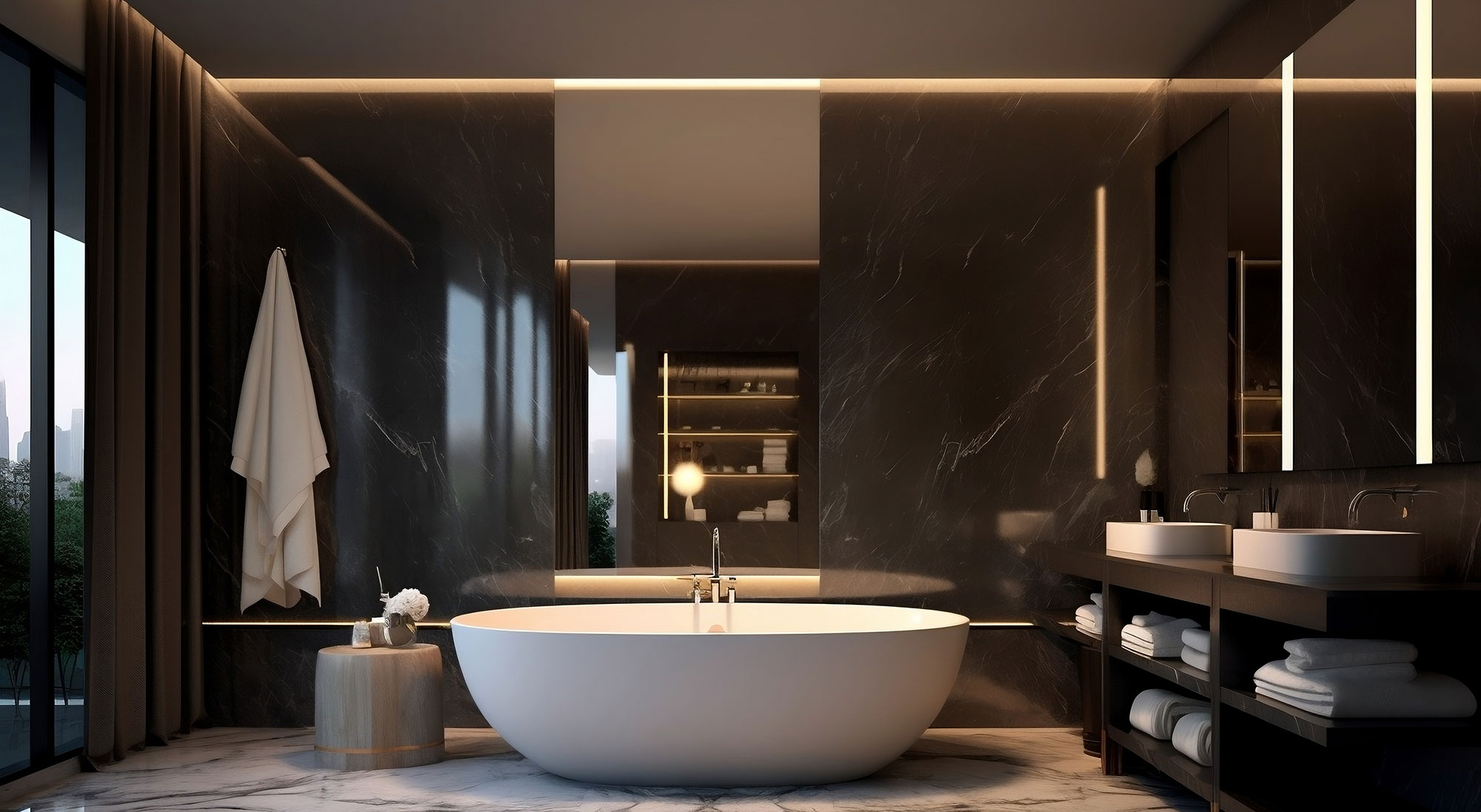
Voltages and zone boundaries follow the IET (BS 7671) wiring regulations. For the full breakdown — including an interactive zone diagram, the complete IP digit tables and example fittings — see our bathroom lighting zones & IP ratings guide. All fixed bathroom lighting must be installed by a qualified electrician under Part P of the Building Regulations.