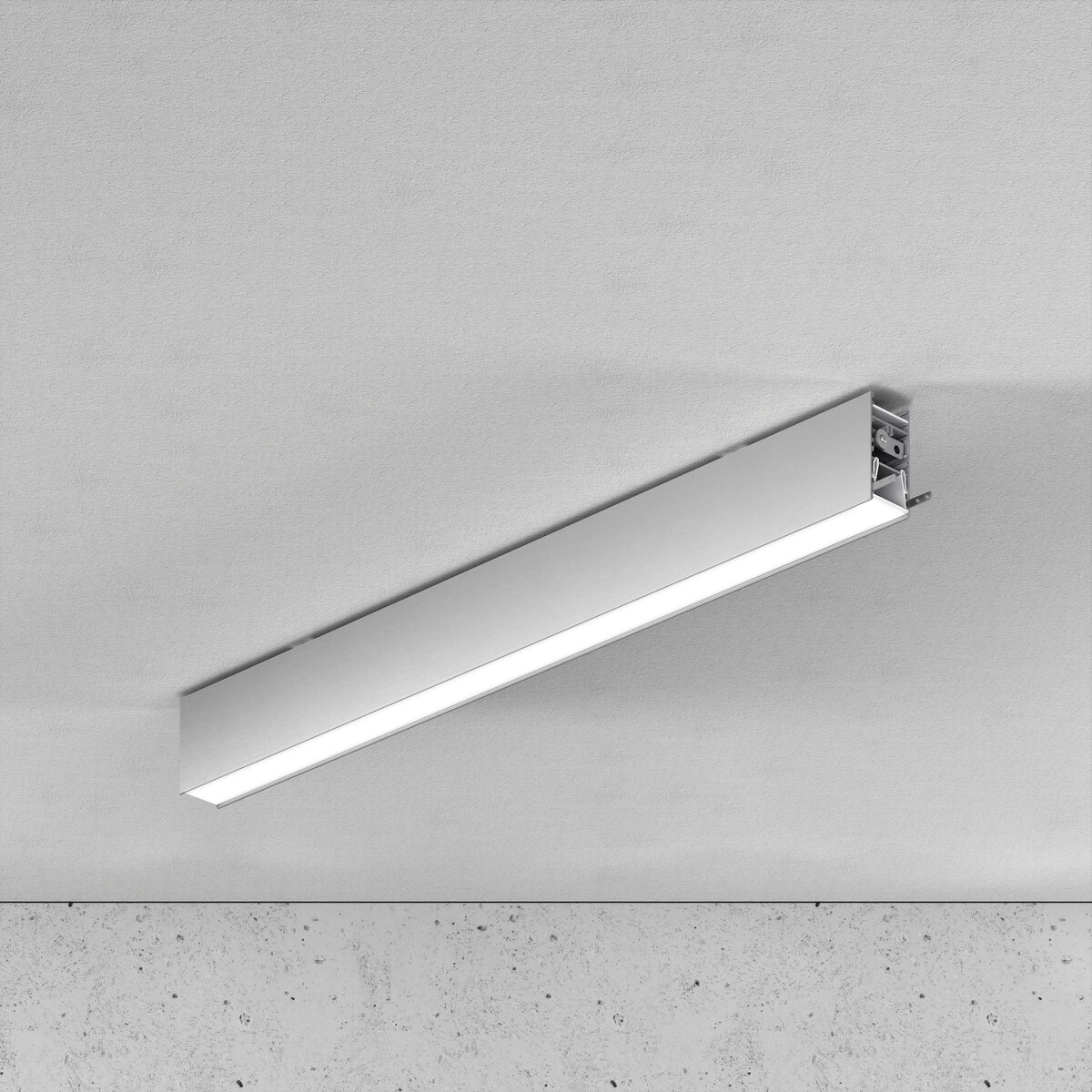
Straight
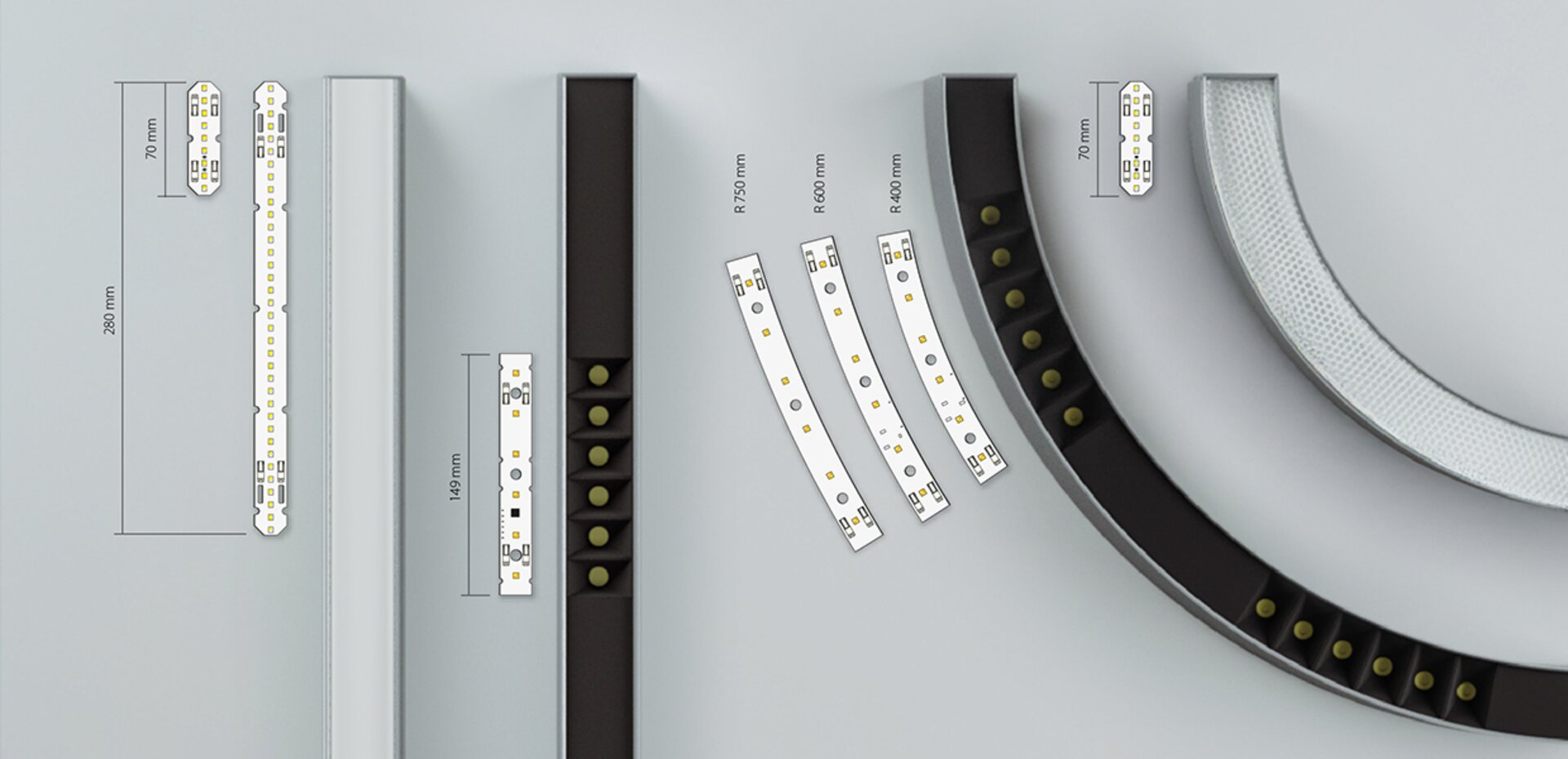
The runs. Seven module lengths, combined to reach any overall length.
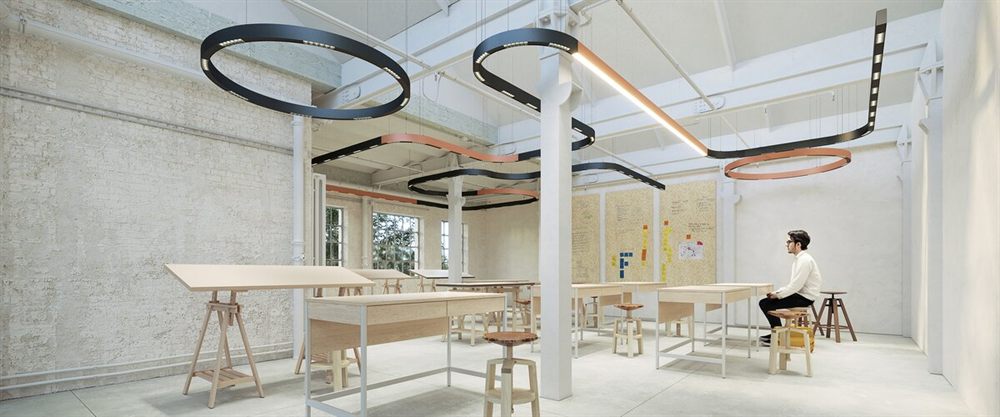
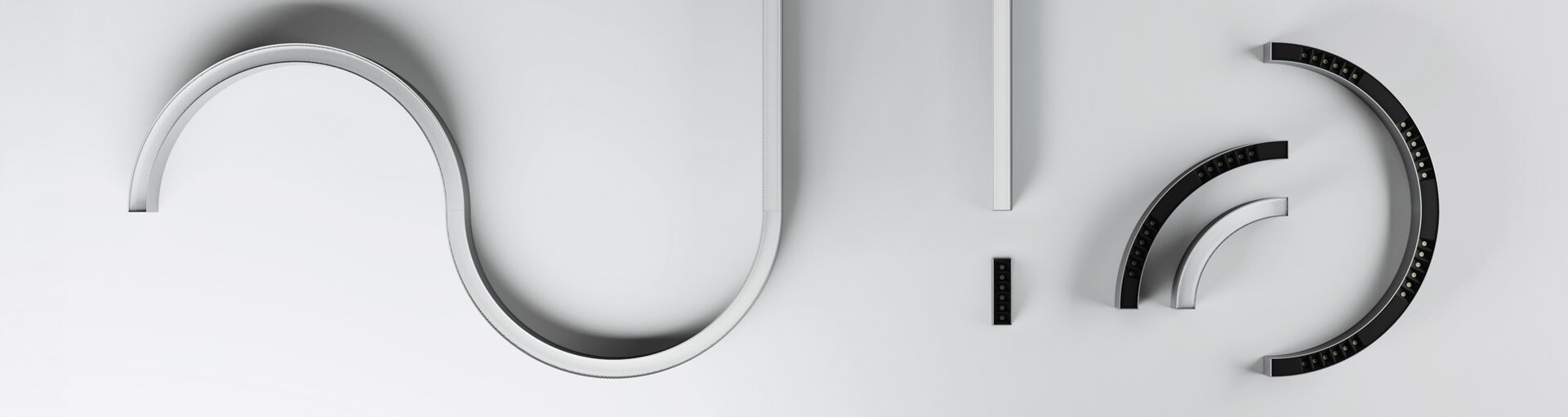
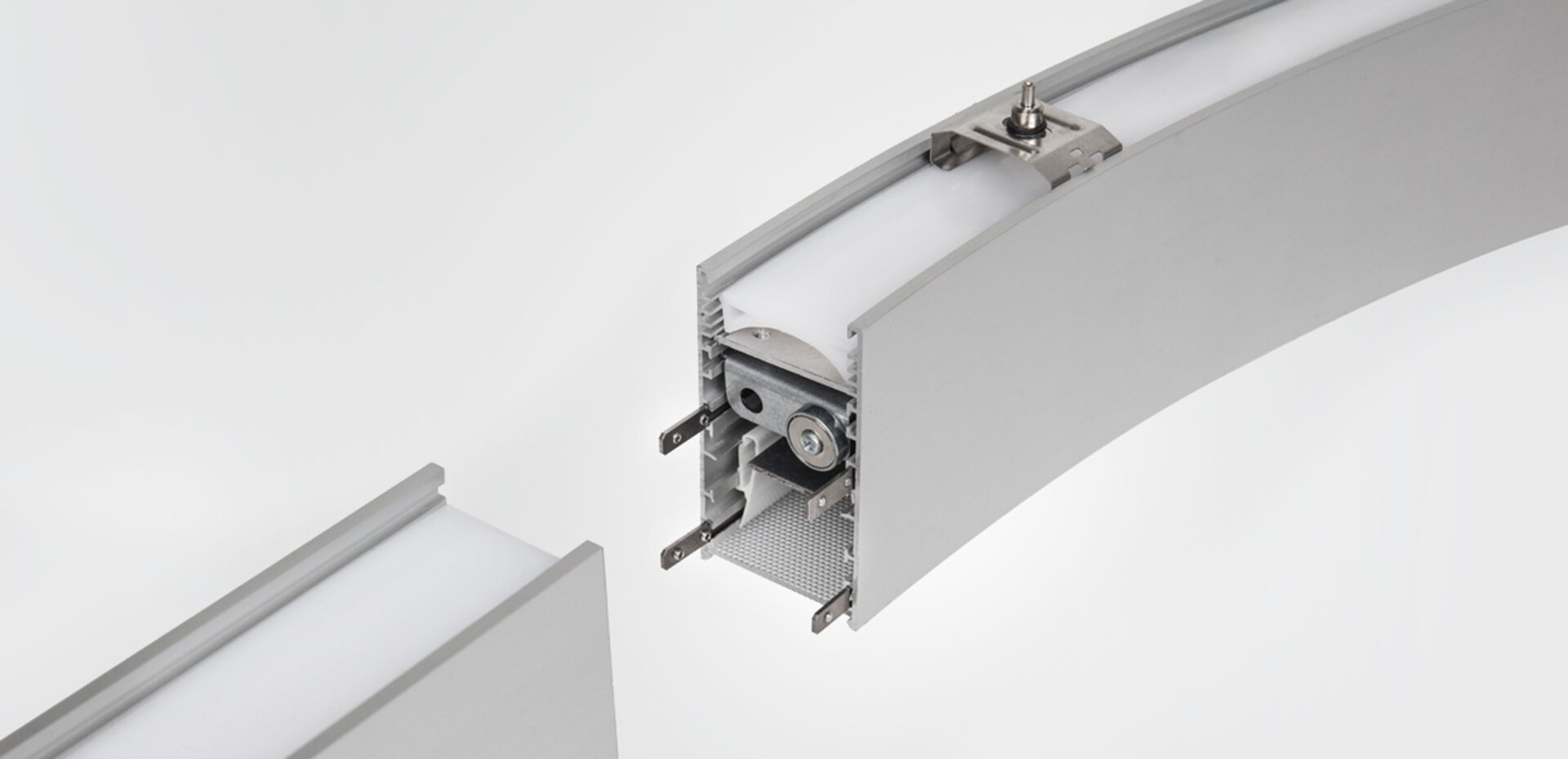
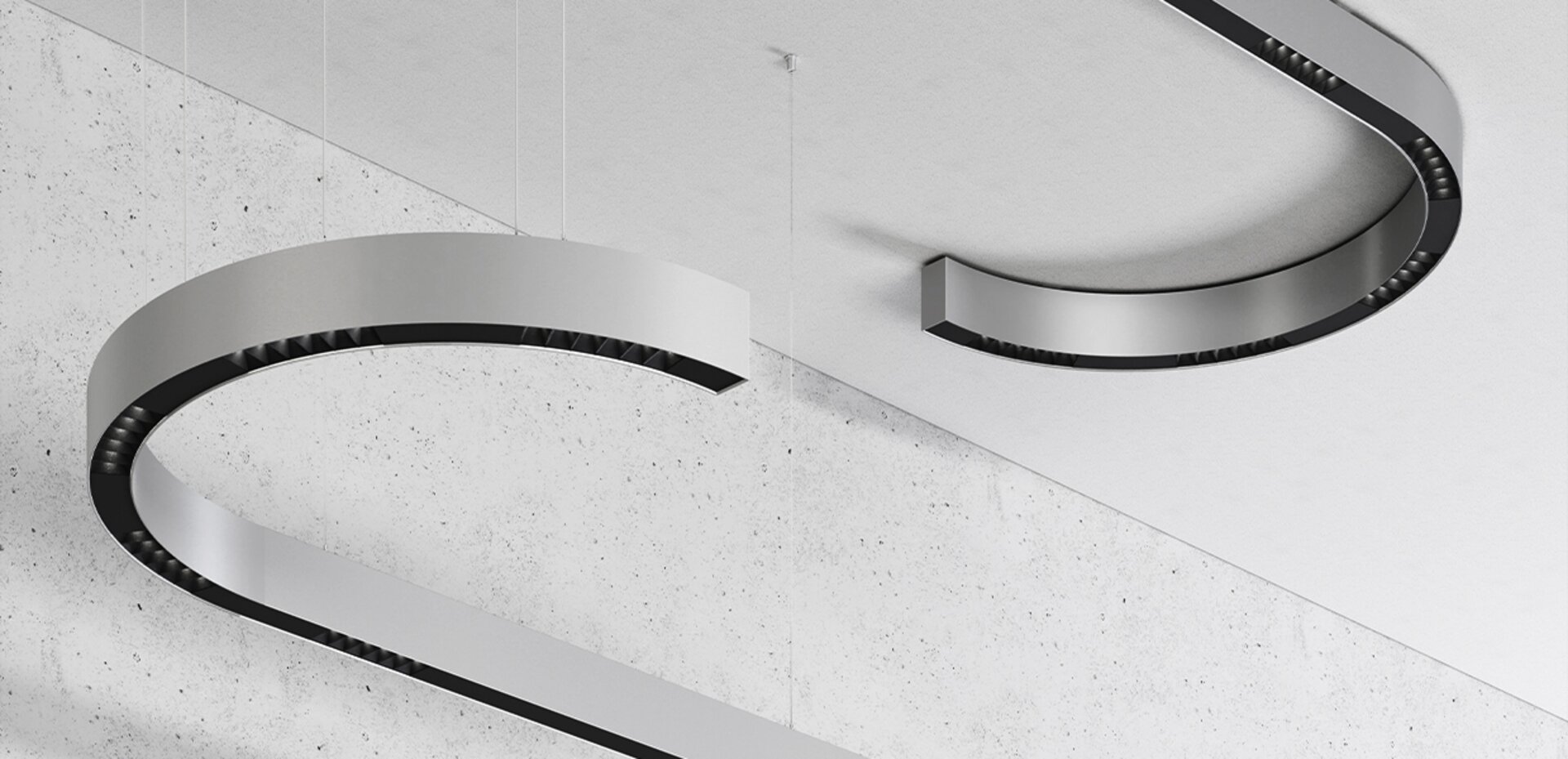
A 48mm profile in straight and curved modules that join magnetically — so a run can turn, loop, wave or close into a ring, and still read as one unbroken line of light. Made to your drawing, quoted by our team.
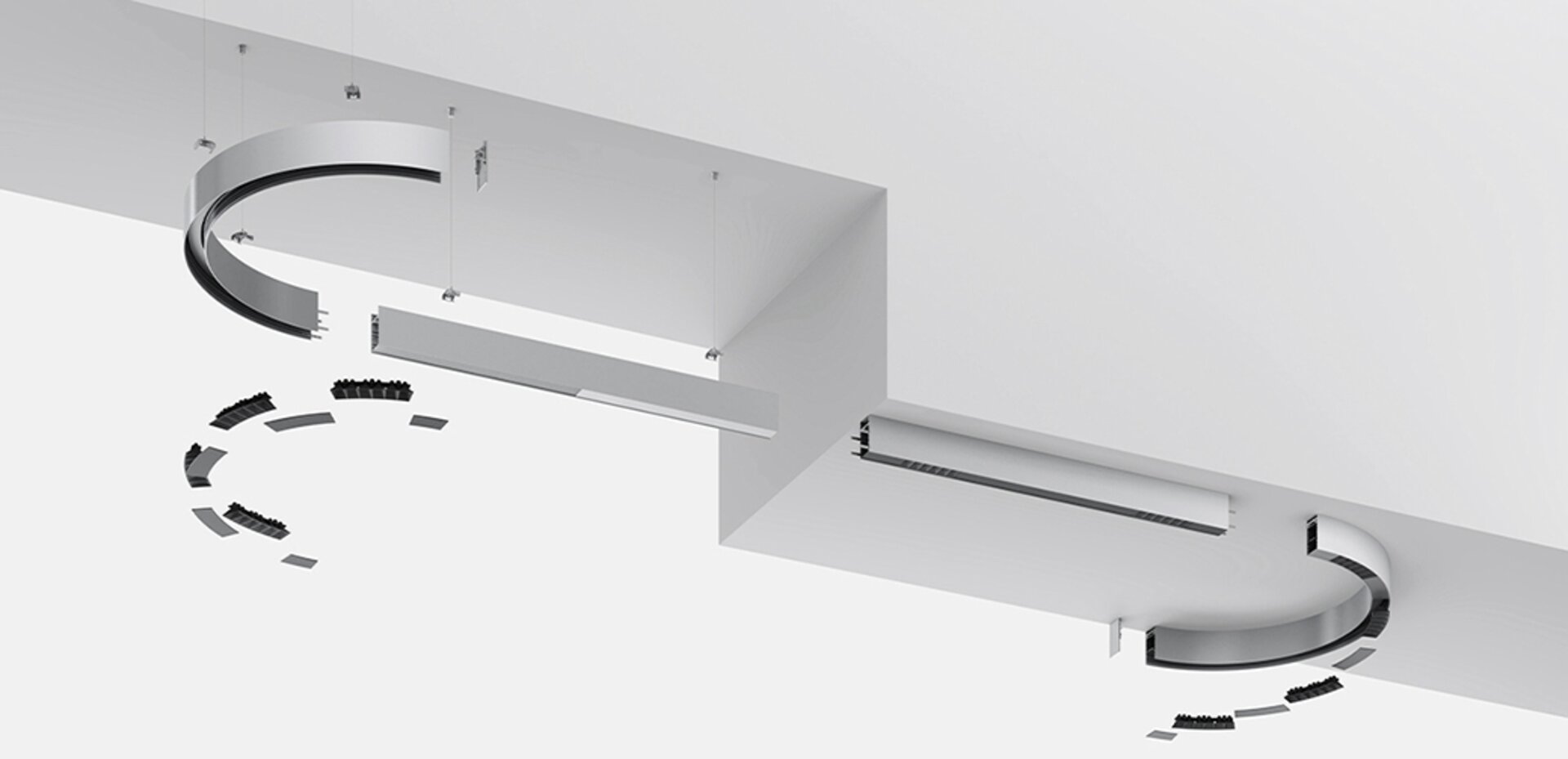
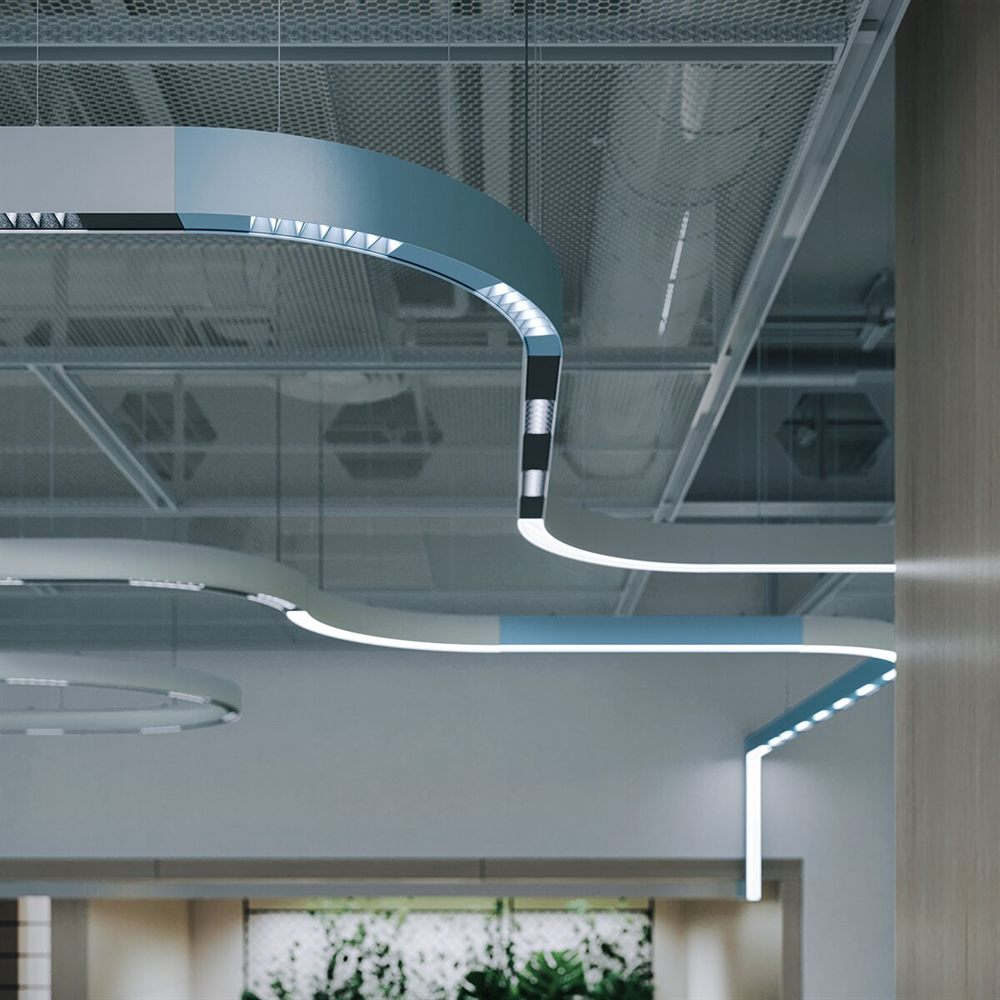
Most linear lighting asks you to pick from a list of lengths and then live with the joins. Serpent Plus is put together the other way round: a set of straight and curved modules, all in the same 48 × 88mm aluminium section, that bond magnetically end to end. What you specify is a form — and the parts list follows from it.
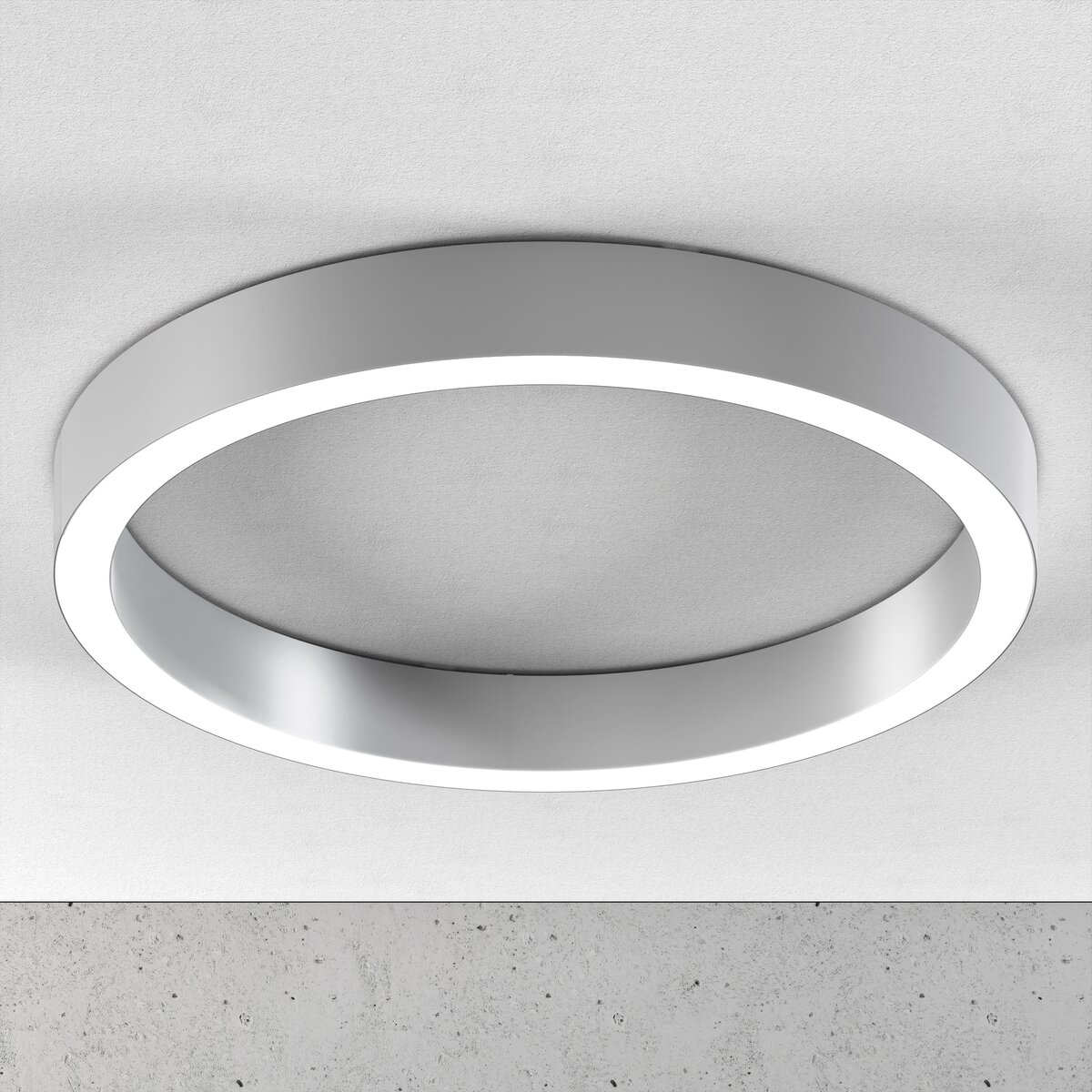
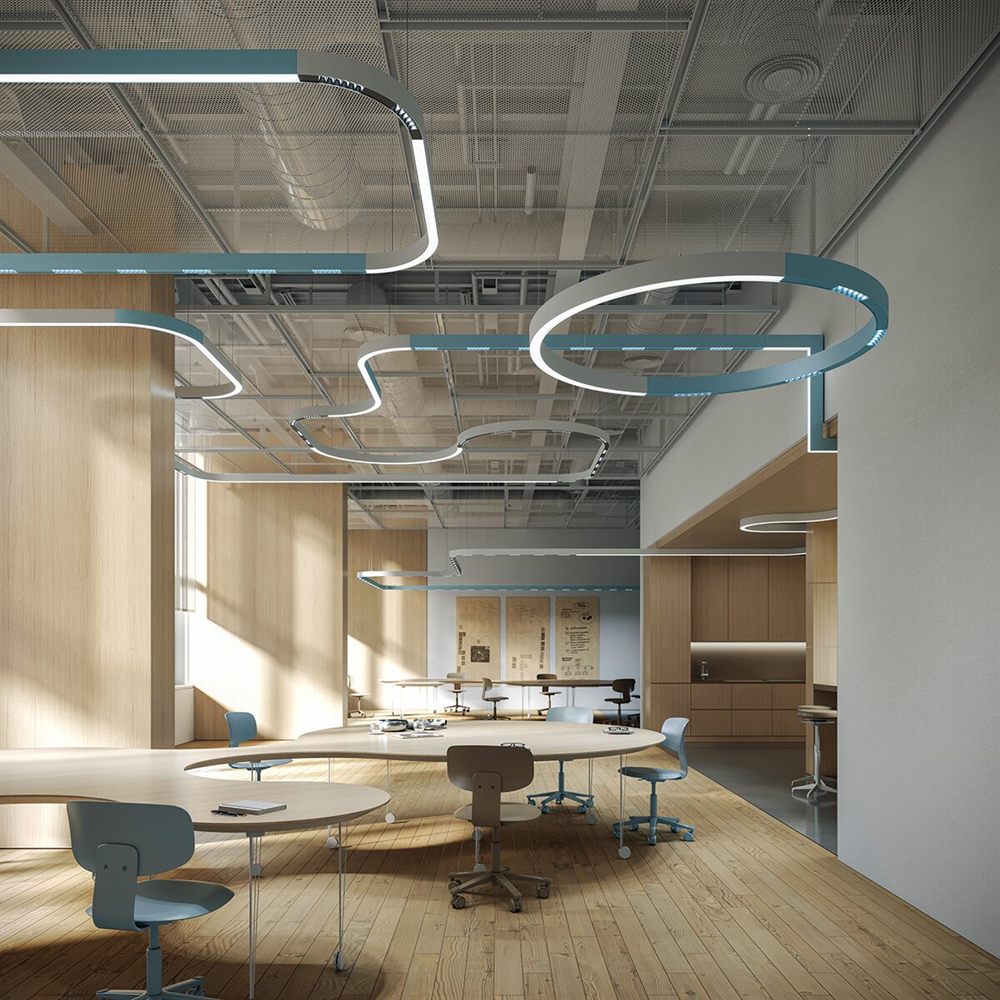
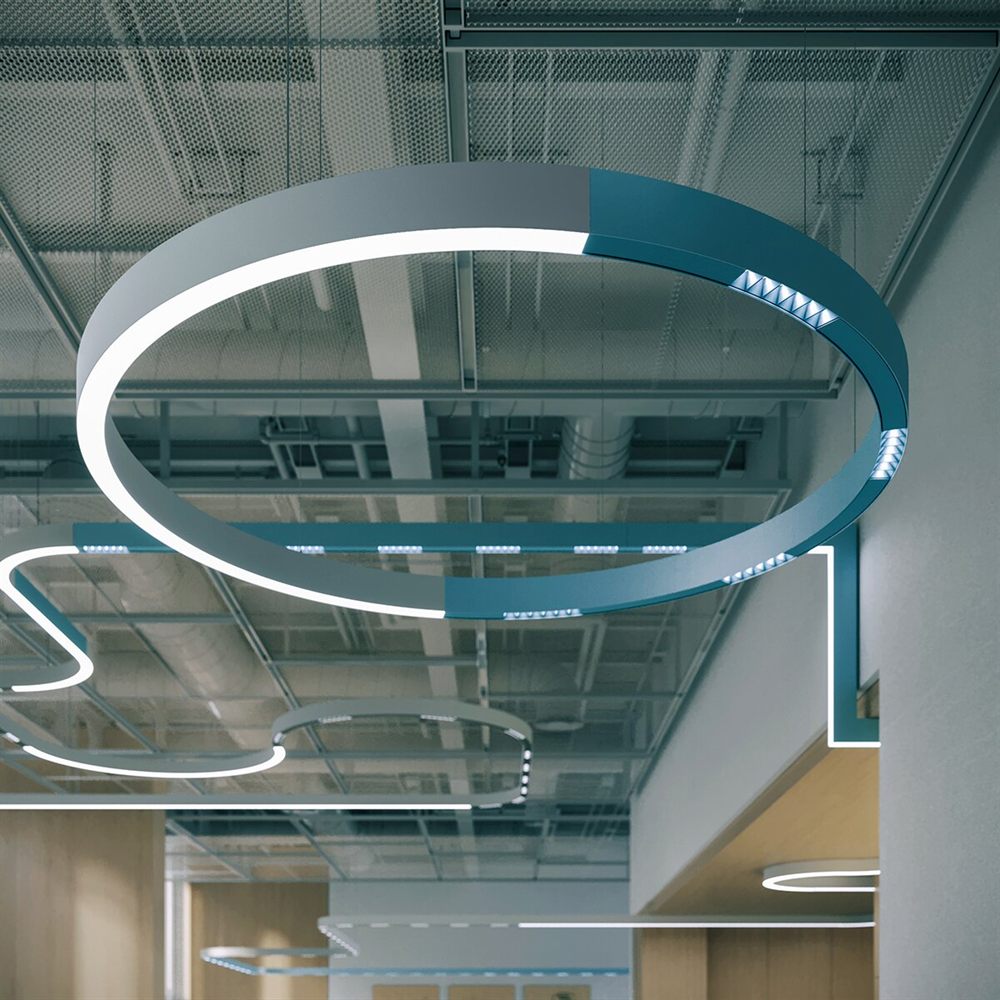
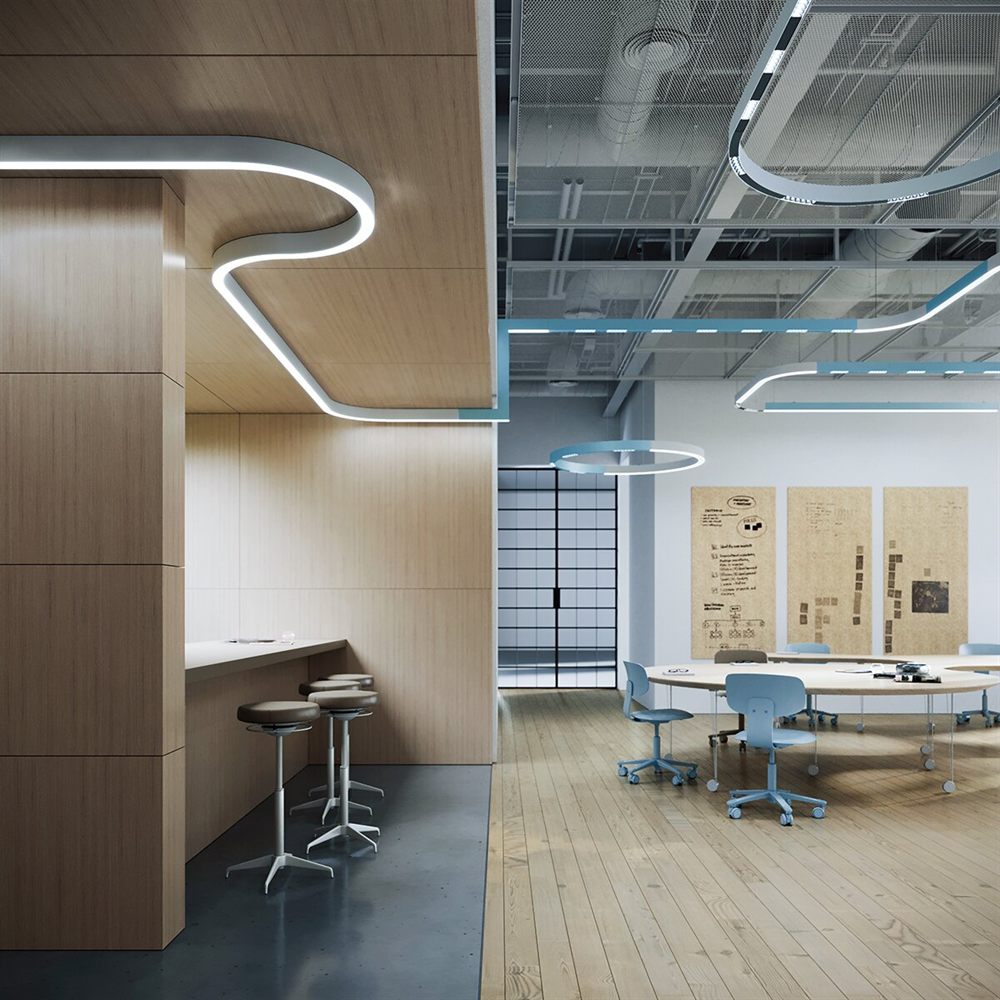
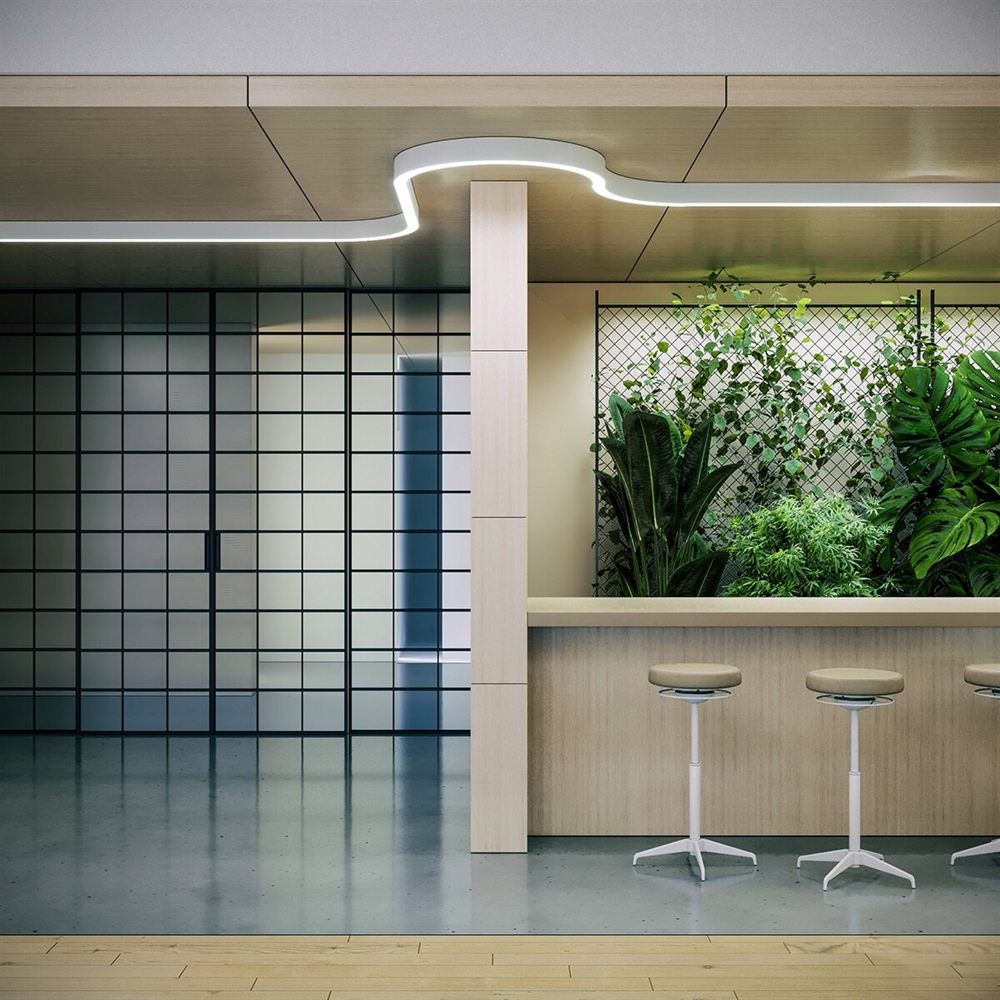
Because the arcs come in three radii and both quarter and half turns, the shapes you can close are genuinely open-ended: a long straight run that turns a corner, a racetrack over a boardroom table, a full ring above a reception desk, a wave down a corridor. Two semicircles make a circle. Four quarter arcs do too, at a wider diameter.
It is aimed squarely at commercial work — offices, galleries, hotels, restaurants, showrooms — where the ceiling is a design decision rather than a grid, and where DALI, UGR figures and CRI 90+ are on the specification rather than nice to have.
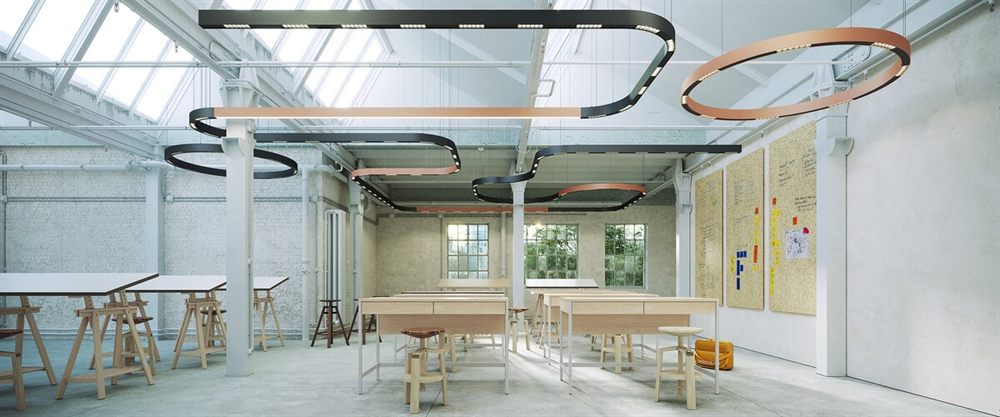
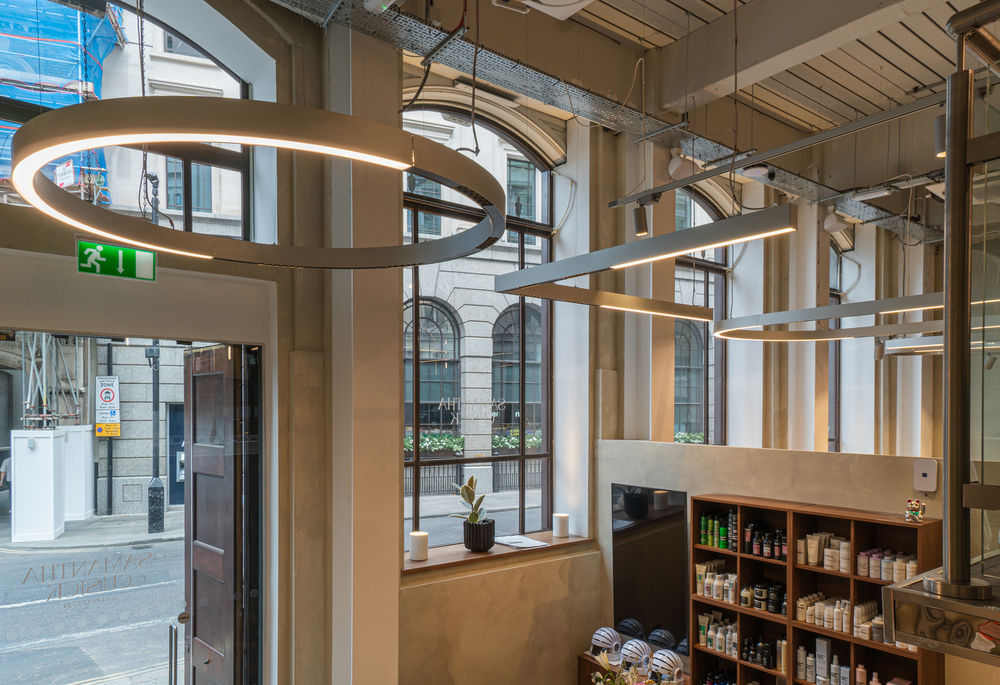
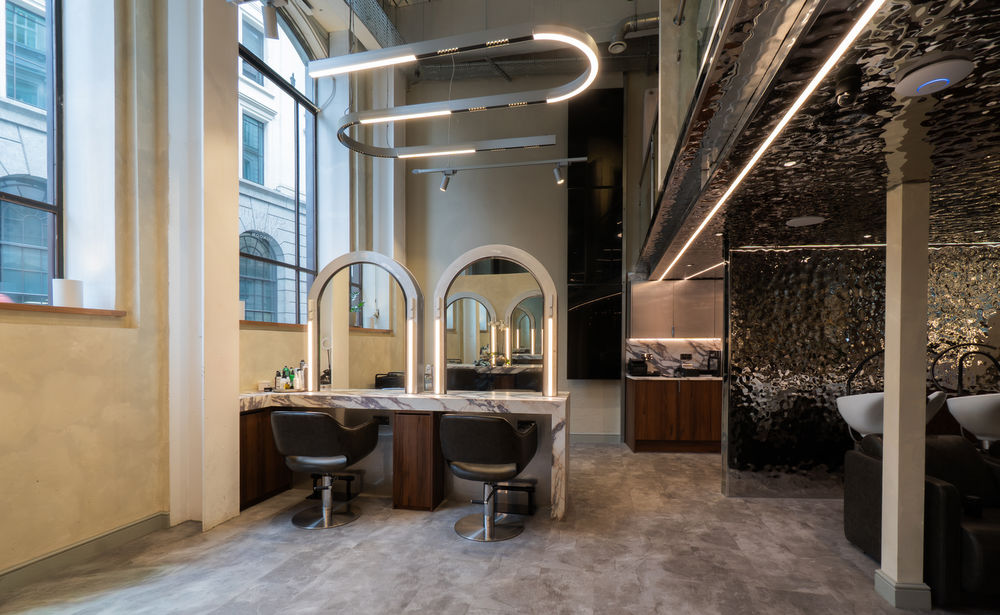
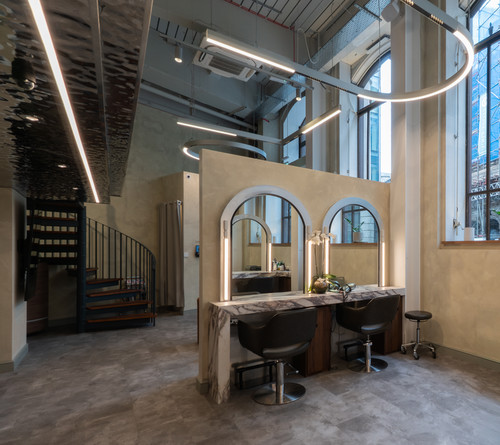
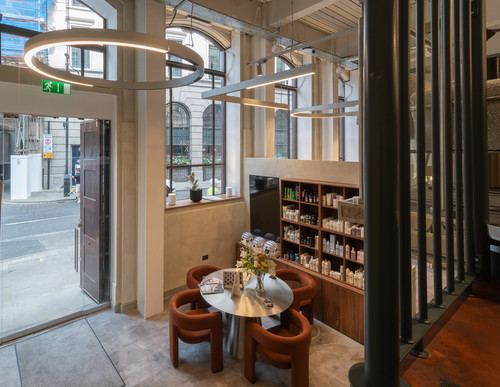
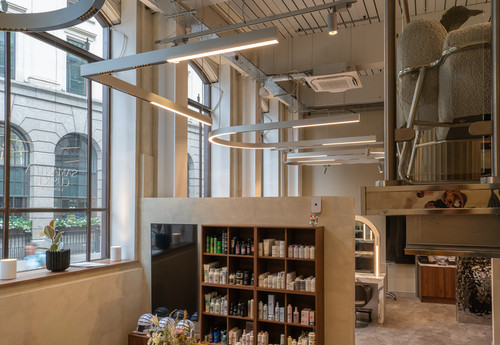
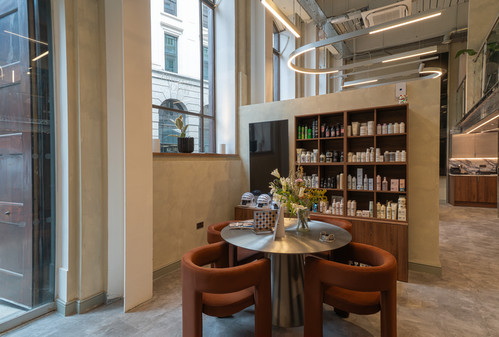
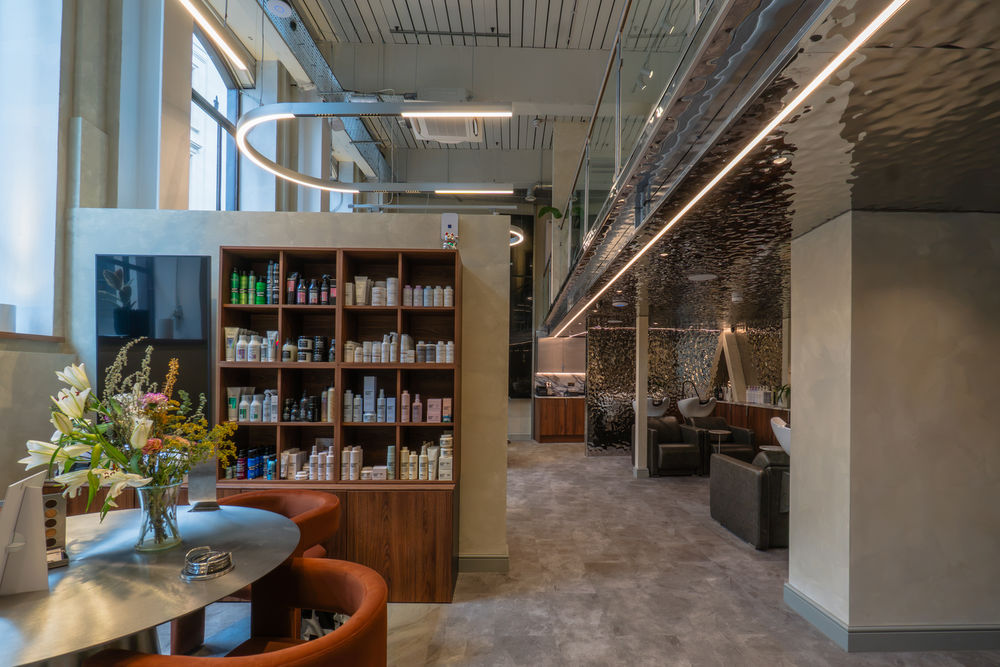
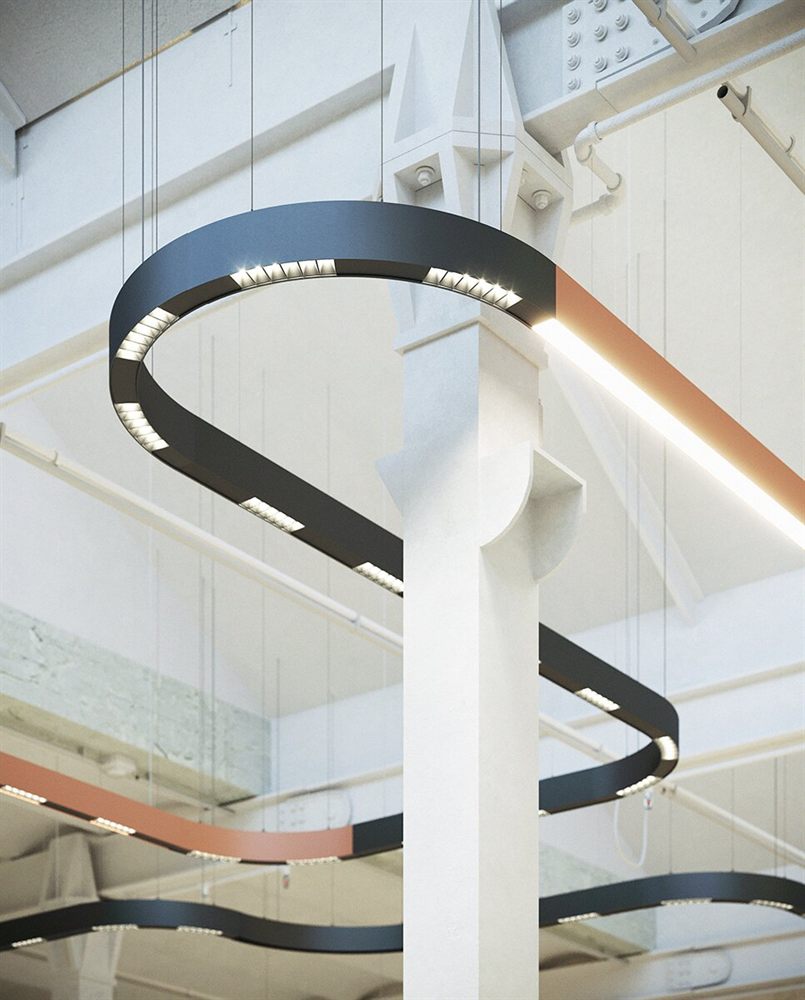
A salon in the City of London, lit by our own design team. Racetracks and rings hang through a double-height void so the forms read from the ground floor and the mezzanine both — drawn, specified, scheduled and supplied by us.
Lighting design project
The salon, finished
The whole scheme photographed as installed — the Serpent forms, the track, the tape and the controls that go with them.
See the project
DIALux case study
How it was worked out
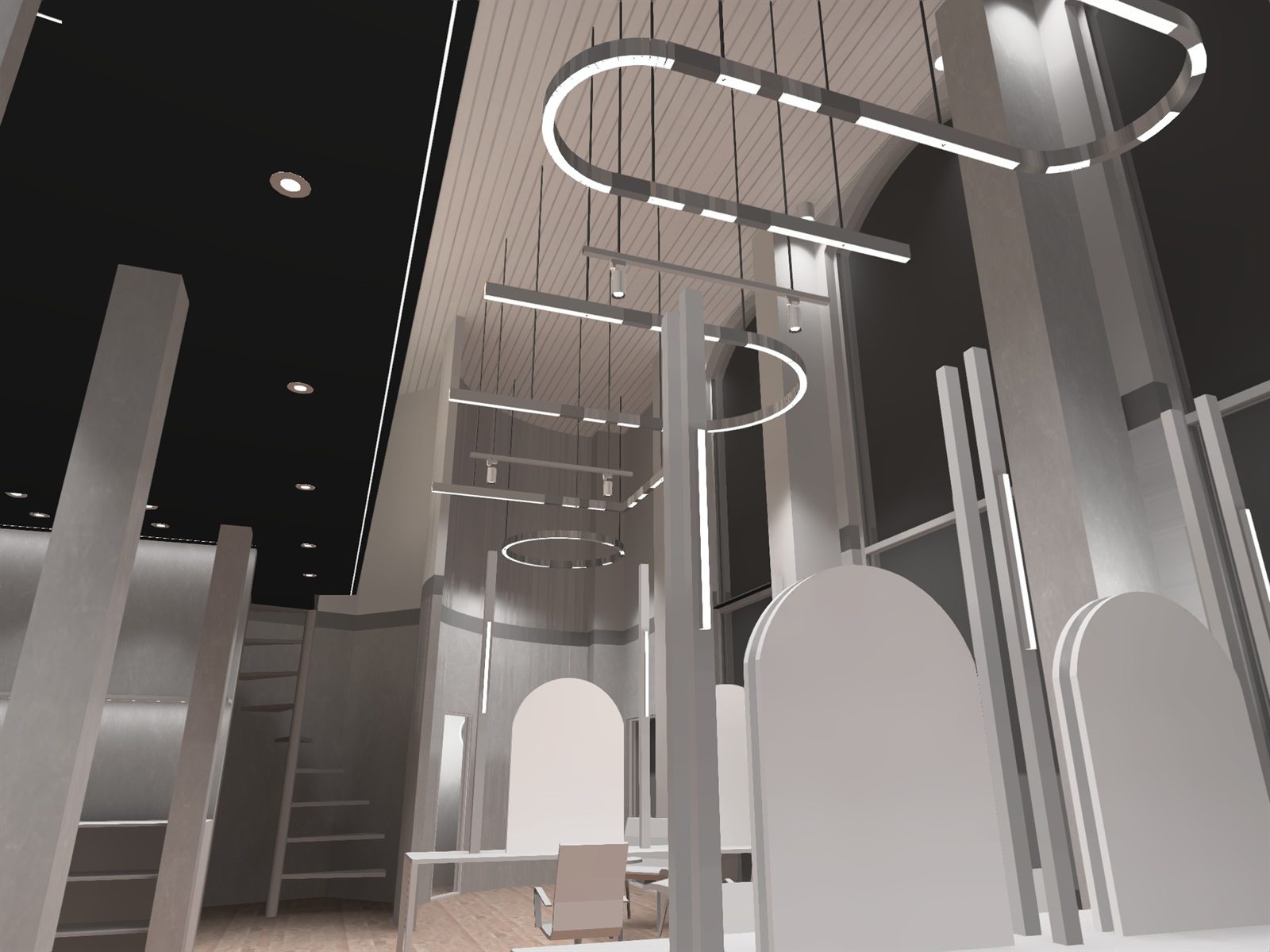
The same salon modelled in three dimensions first: drop heights, sightlines from both floors and the lux levels, settled before a fitting was ordered.
Read the case study
Ninety seconds on how the modules meet, how the magnetic joint works, and what the system looks like once it is up. Worth watching before you draw anything.
Add modules and they snap onto the free end, so the shape you draw is always one that can be built. Pick the mounting, optic, colour and control, draw the form, and the tool works out the module schedule and sends it to our team to price.
Nothing is priced in the tool — Serpent Plus is quoted per project. Either route ends in the same place: a schedule and a price from our team.
Nothing to draw yet? Start here instead. Send us the ceiling plan, the reflected ceiling plan, an elevation, a sketch on the back of something — whatever you have. We'll work out the form, the module schedule, the suspension, the drivers and the controls, and come back with a price.
We have our own lighting design team, and they are happy to help with any project — Serpent or otherwise. See what they do
Every Serpent Plus form is composed from these. They share a section and a magnetic joint, so any of them meets any other — the only question is what you want to draw.
The runs. Seven module lengths, combined to reach any overall length.
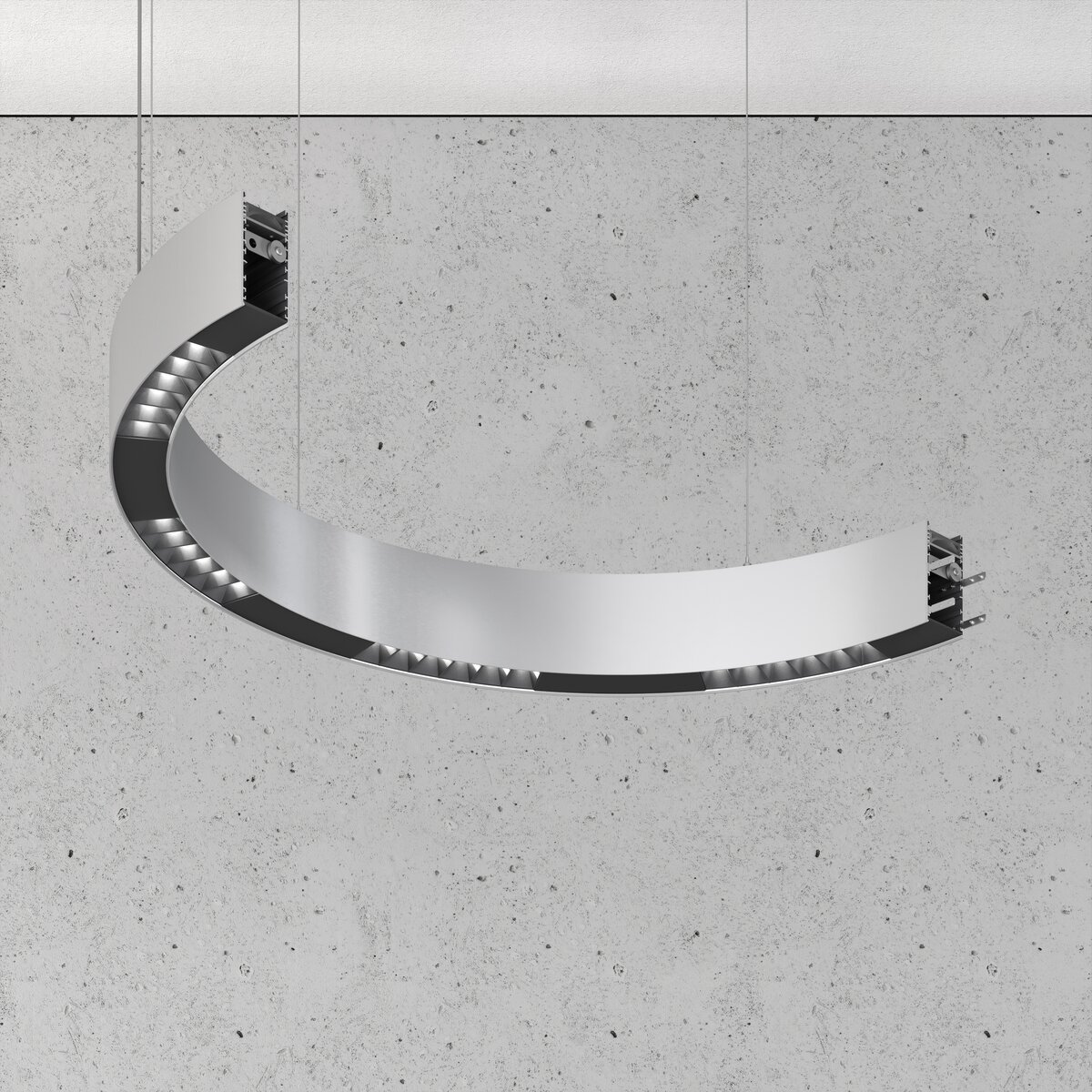
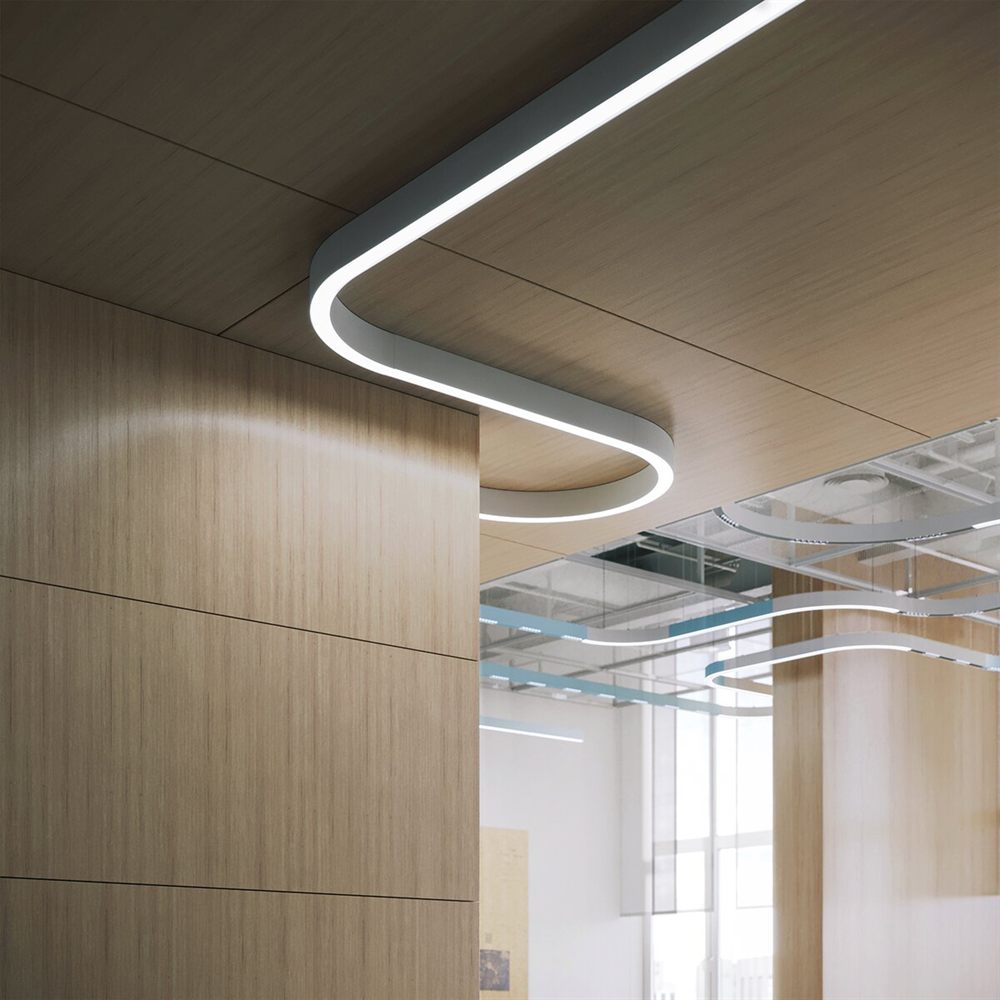
The turns. A quarter takes a run round a corner without a mitre; a half doubles it back on itself, caps a racetrack or waves down a corridor.
Two semicircles closed into a circle, at whichever radius you pick.
The same modules do both, so a scheme can drop over a desk in one room and be mounted to the ceiling in the next without changing family.

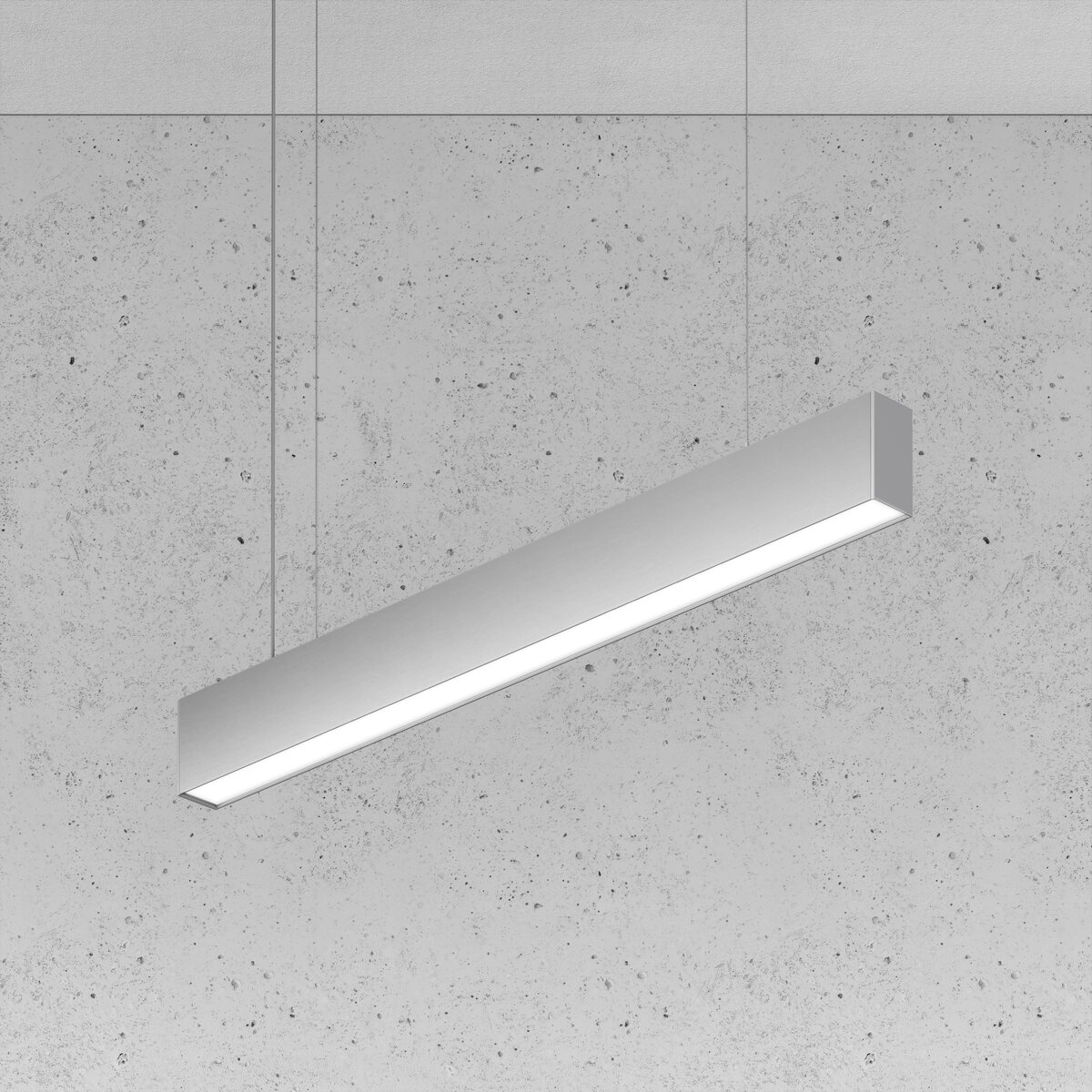
Dropped to your specified length. The only way to get uplight, and the usual choice over desks, tables and reception counters.
Down, or up and down
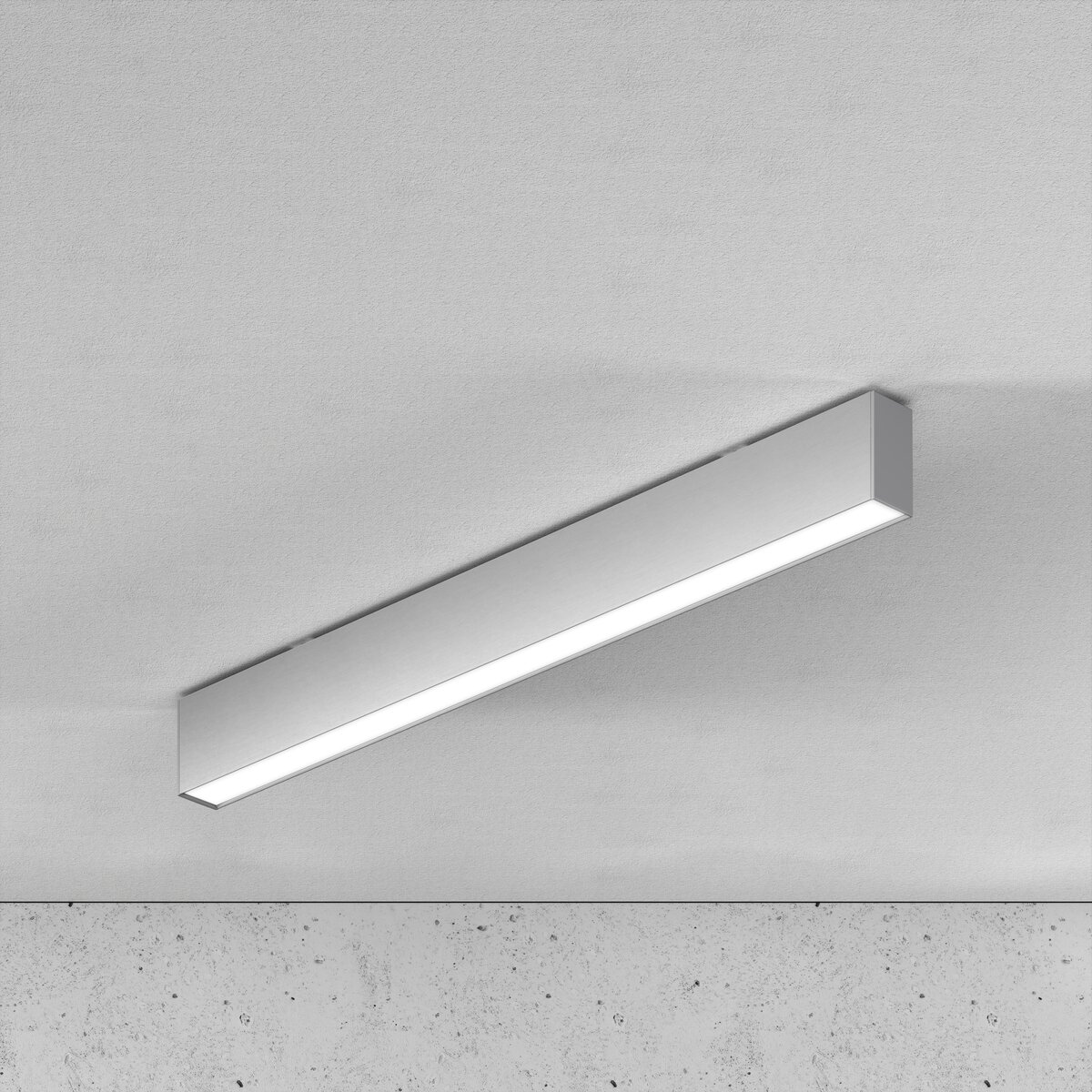
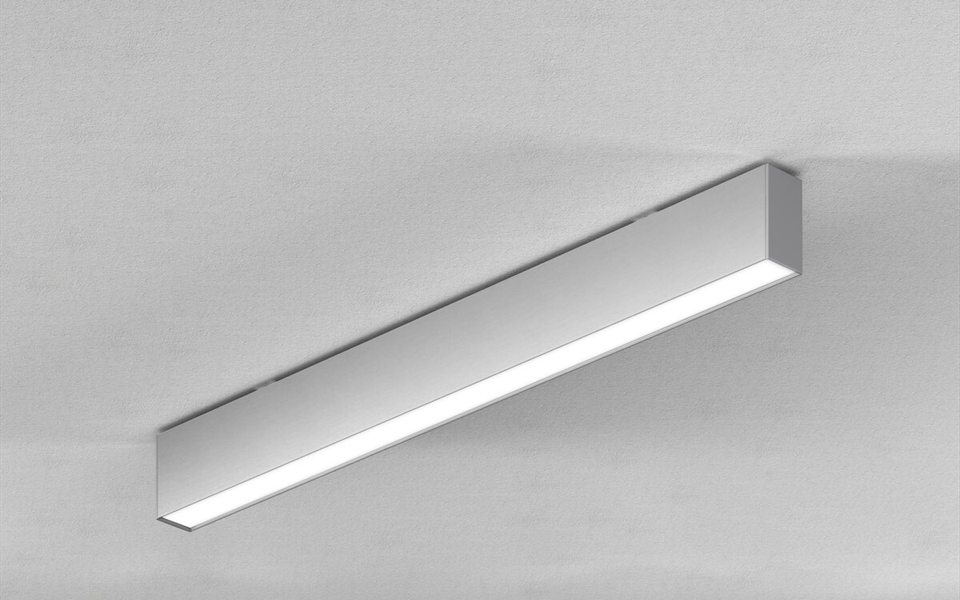
Flat to the slab or soffit where there is no void and no room to drop. Downlight only — there is nowhere for an uplight to go.
Down only
A silicone uplight cover washes the ceiling while the main optic works below. Lifts a low ceiling and takes the contrast off screens.
Adds ceiling washThe optic decides how the line reads and what glare figure it achieves. It is usually the choice that matters most, and the one worth talking to us about.
The whole cover glows evenly and the light spreads wide. The softest look and the one that hides the joints best across a long form — but it is not a glare-controlled optic.
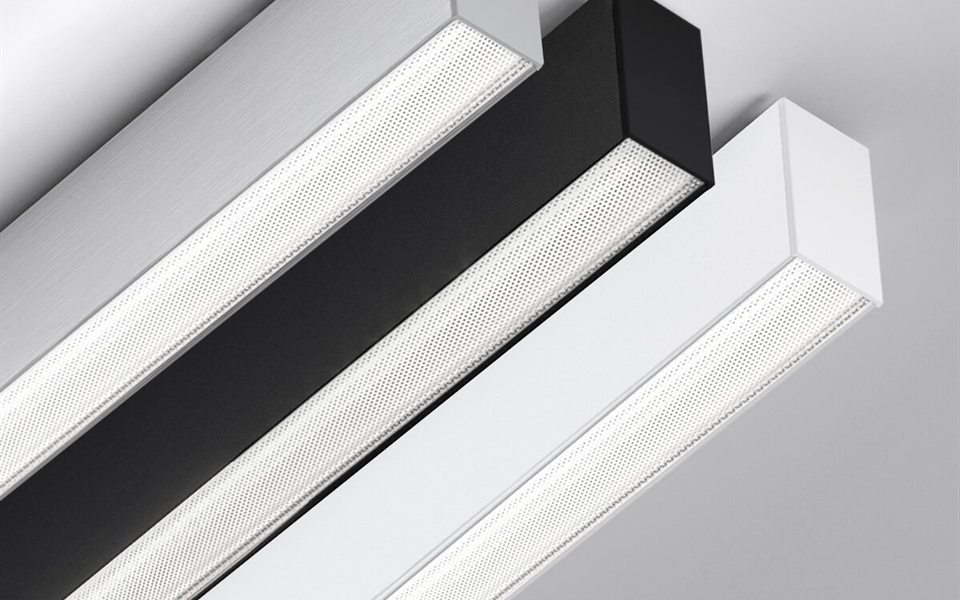
Still one continuous line, but a fine prism structure holds the light back from the shallow angles that cause glare. Reaches UGR<19 for general office work.
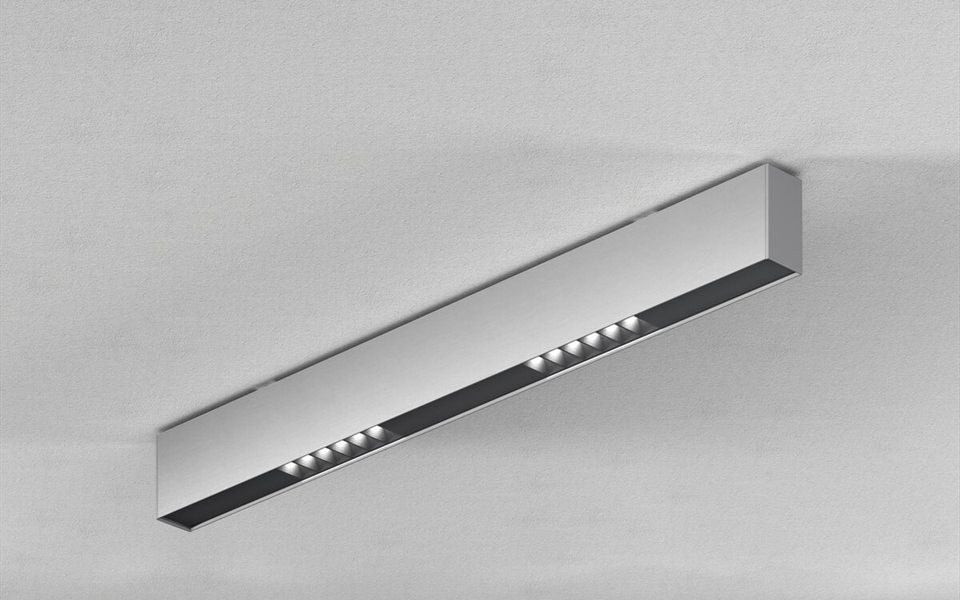
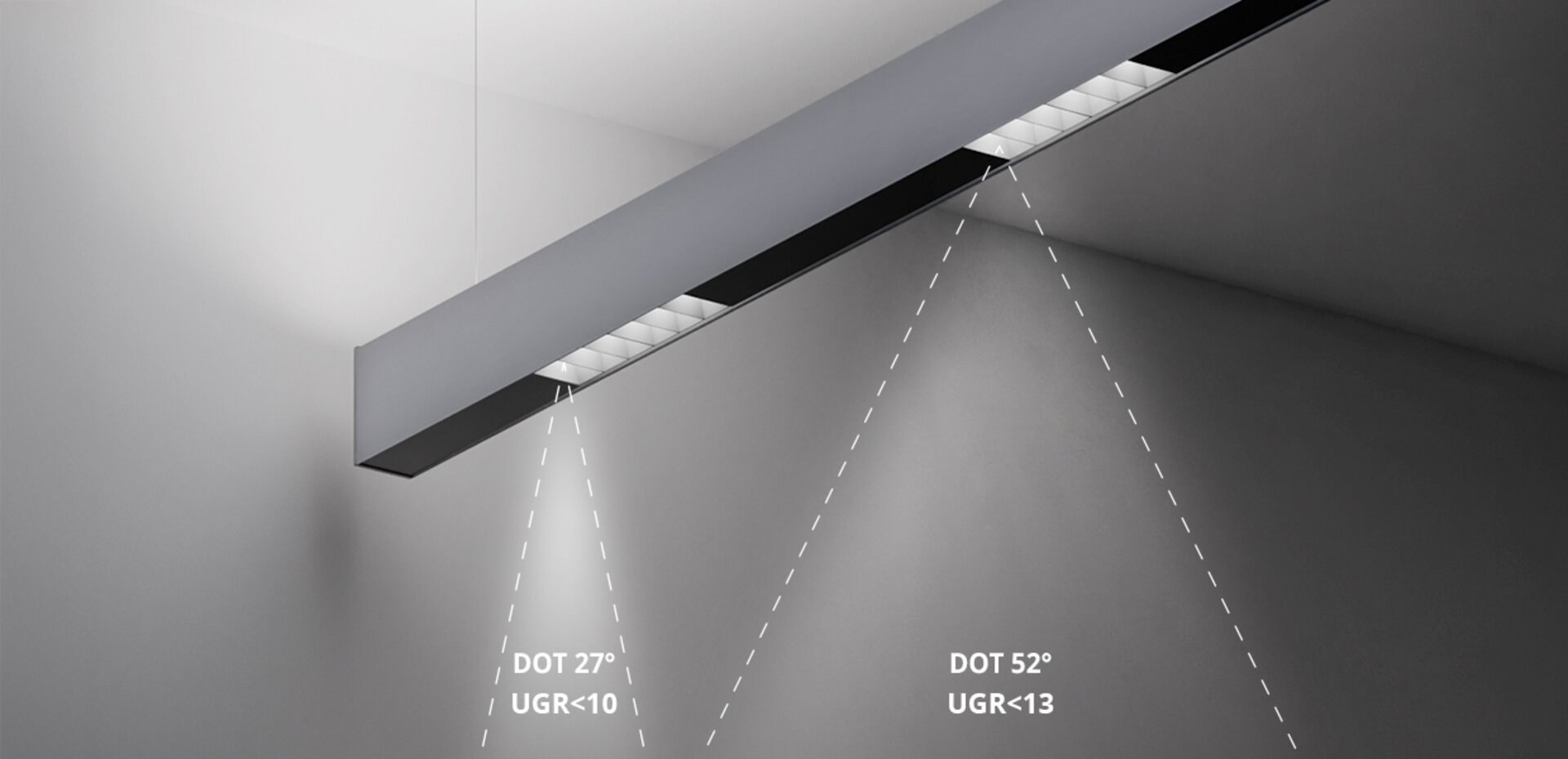
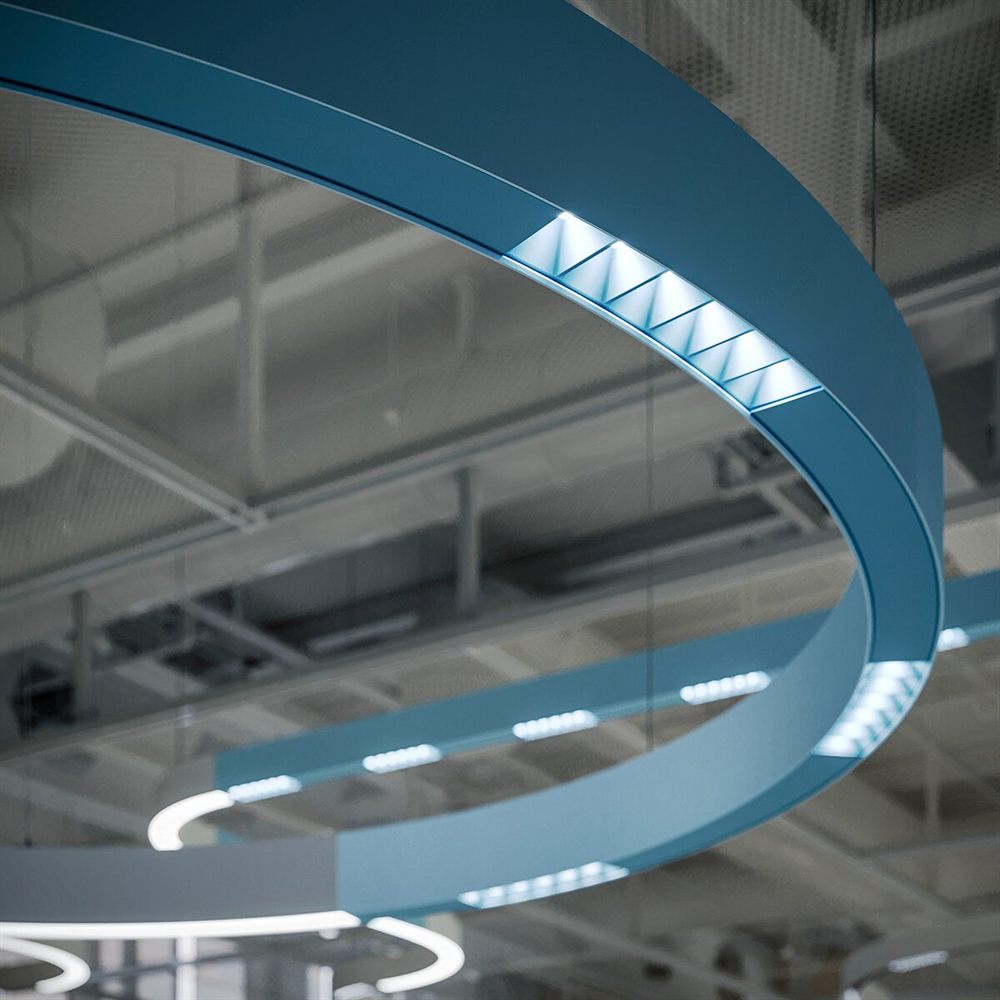
Separate optics set back in a dark channel instead of a diffuser, so the face reads as points rather than a line. Deep cut-off where screens are the priority. Made in two beam angles — 27° at UGR<10 and 52° at UGR<13 — and the only optic made in the two longest modules.
The covers above are shown square onto the face, which is where the difference actually is — a photograph of a lit fitting reads as the same white line whichever cover is on it. Ask us for photometric files if you need the real distributions.
The manufacturer's own cutaways and diagrams — the joint, the boards, the mountings and the beam angles.
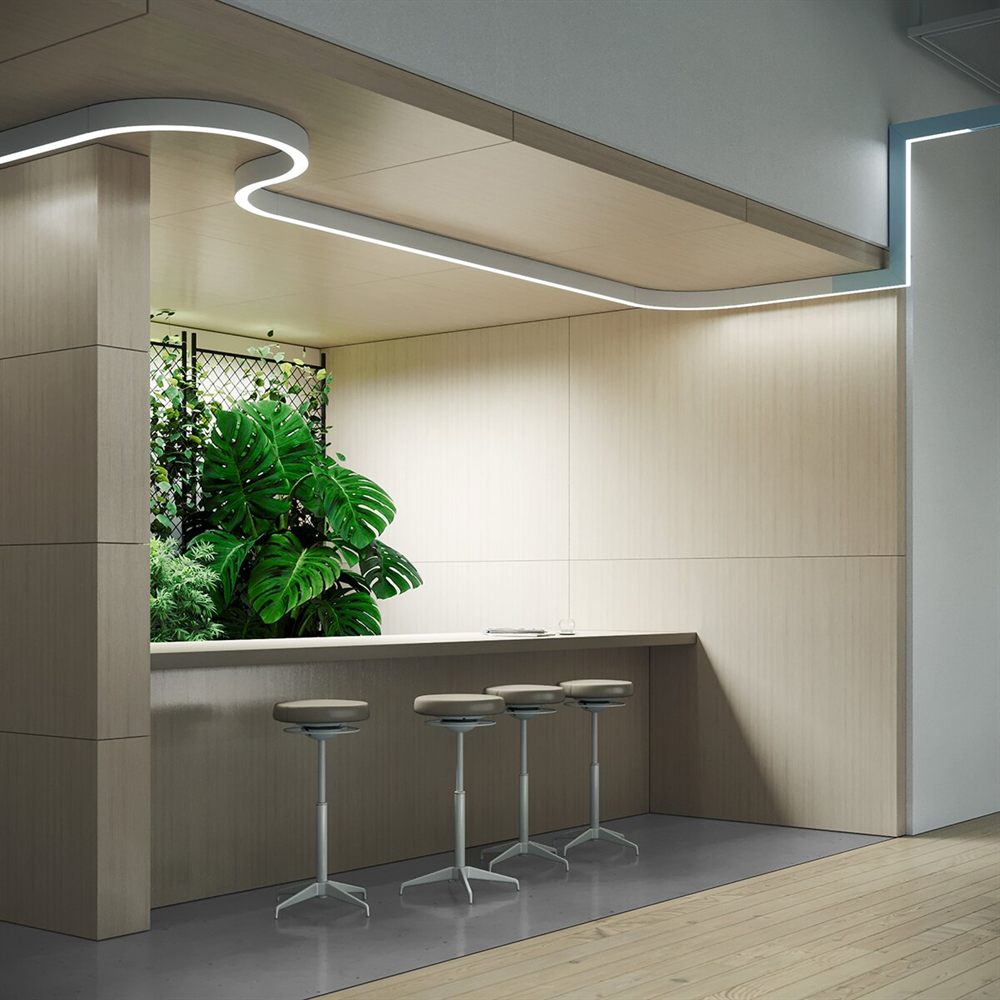
Rings over desks, racetracks over tables, serpentines down circulation — every one of these is straights and arcs out of the same kit.
The figures that stay the same whatever form you build. Full photometric data, mounting instructions and DIALux files are available on request — ask when you enquire and we'll send them with the quotation.
The shape builder covers the catalogue. Past that, the factory will alter the modules themselves — and on a commercial job it is often worth asking.
Straight modules can be made to a custom length, and an arc's length can change without changing its radius — up to 2700mm of arc. Both work around the fixed spacing of the DOT optics.
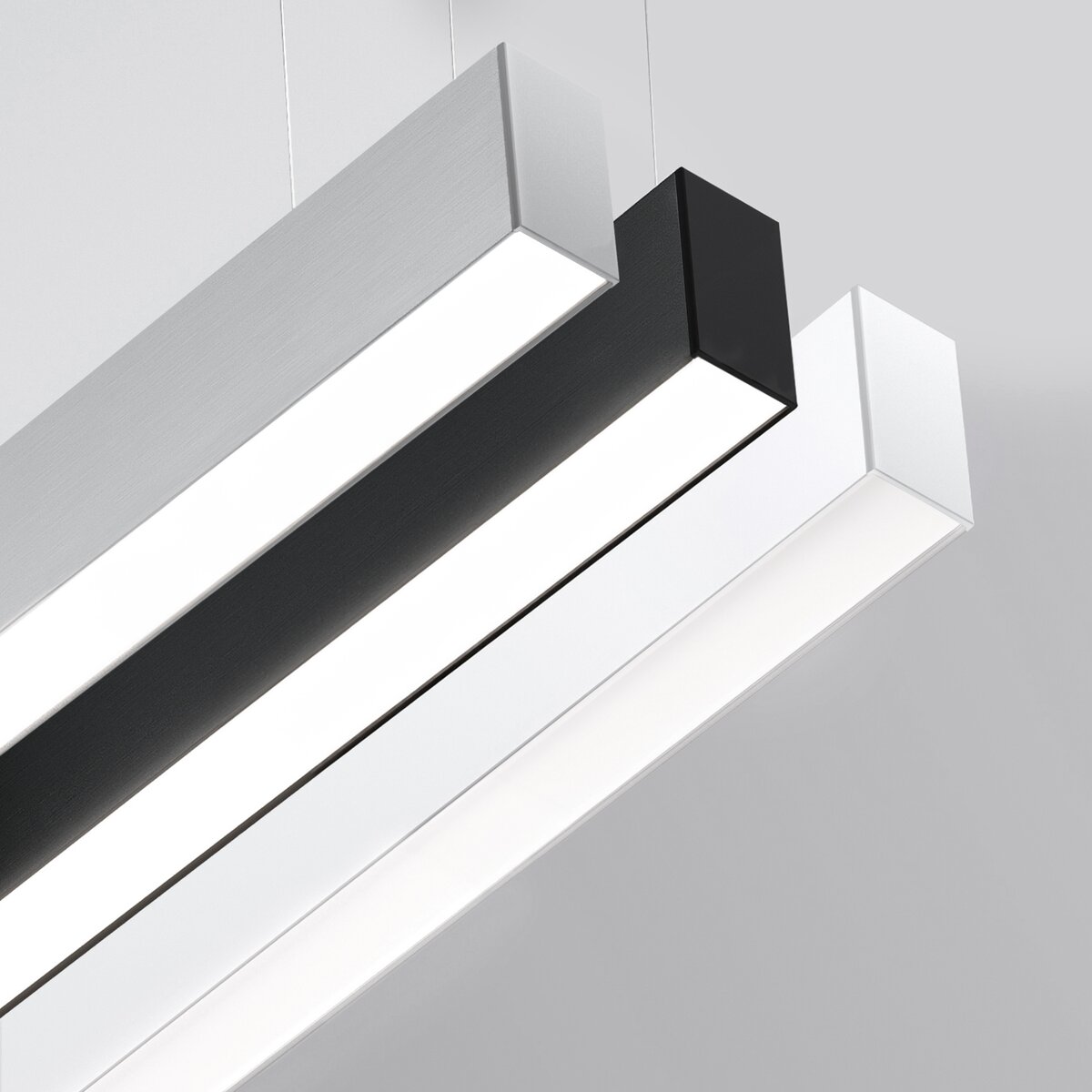
Beyond the three stock finishes: caramel, sand, pastel blue and light sage to order, NCS lacquer across the whole luminaire including the DOT caps and blends, or RAL on the body only. Versions can be mixed — a white luminaire with caramel DOT blends, say.
Modules can be added, removed or swapped for another variant along a single form: more DOT along one stretch, black DOT optics in a white luminaire, or a microprismatic shield interspersed with blends.
2700K to 7800K, rather than only the stock 3000K and 4000K — which is what makes Human Centric Lighting schedules possible over the day.
The uplight and the downlight can run on independent control, so the ceiling wash and the working light are not tied together. The uplight cover itself comes frosted for diffusion or clear for efficiency.
The uplight can take digital LEDs, constant-current modules, RGB or RGBW. The power supply output can be positioned to suit the ceiling, and extra switching or control gear specified.
Because there is no single thing to buy. A Serpent Plus scheme is a form composed of modules, plus the suspension, drivers and controls to suit the ceiling it goes in — and the same shape drawn at two different radii is a different order. Sending us the drawing takes about a minute and gets you a schedule and a price that are actually right.
R400 is the smallest, and it is made as a semicircle only — so the tightest closed form is an 826mm ring. If you need a corner rather than a turn-back, the quarter arcs start at R600. Anything larger than R750 is made from straights and shallow turns rather than a single arc, which is one of the things we work out for you.
Microprism reaches UGR<19, which satisfies most general office specifications. If the room is screen-heavy or the specification calls for UGR<10, that's DOT. Frosted is the softest and the best at disguising joints across a long form, but it is not a glare-controlled optic. Tell us the space and we'll say which we'd put in it.
Yes. Each module is ordered separately, so a single form can change optic along its length and a project can run different finishes room to room. It is worth flagging on the enquiry so we schedule it correctly rather than assuming one specification throughout.
No — up-and-down is suspended only, because a surface module sits against the ceiling and there is nowhere for the uplight to go. If you want indirect light you need a drop, and the builder above will only offer the combination where it exists.
Yes, as part of the quotation. Suspension kits, drivers, connectors and end caps are scheduled alongside the modules — the specification builder covers the luminaire itself, and we add everything around it when we price the scheme.
Send us the plan and whatever you have decided so far. We'll come back with a module schedule, a control strategy and a price — and if the form you want isn't buildable as drawn, we'll tell you what would be.